The Pagani Story: Why It's the World's Most Exclusive Hypercar — Price, Rarity & Investment Guide (2026)
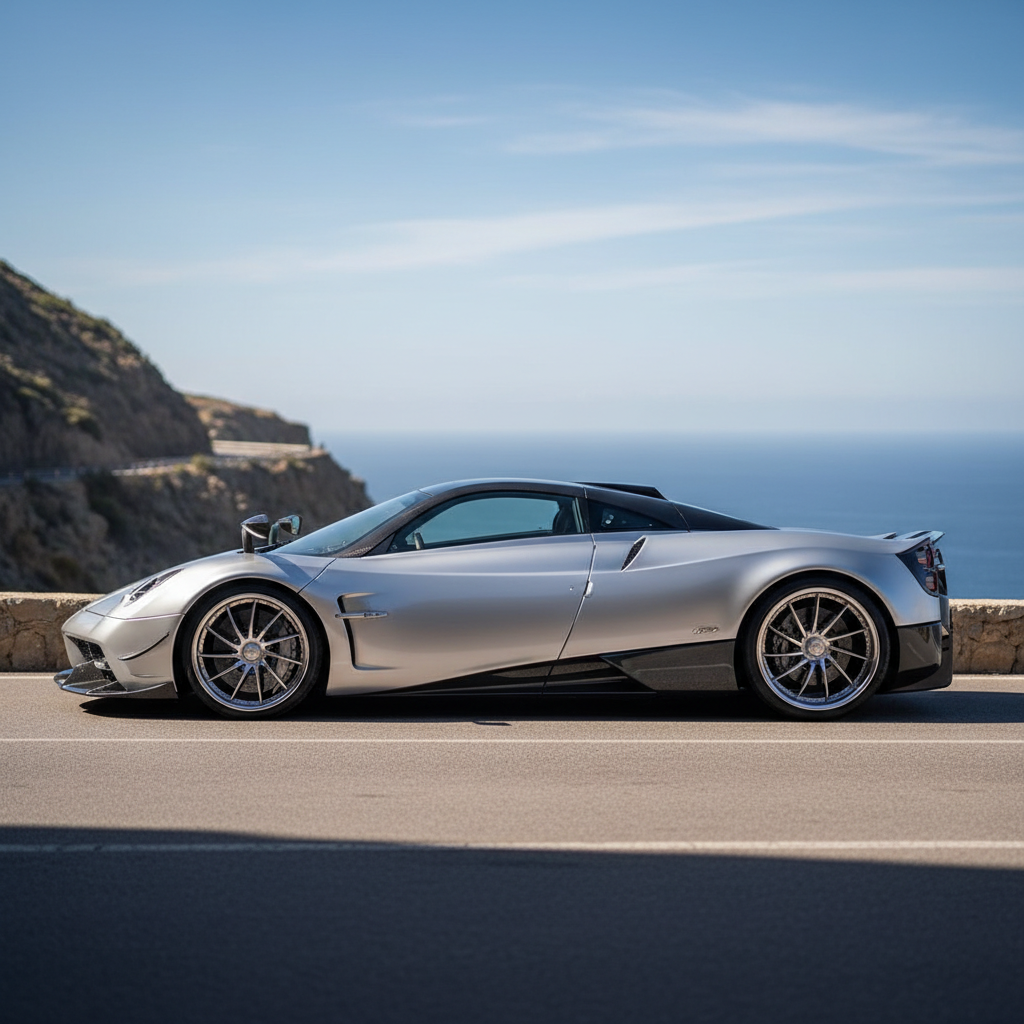
Fewer than 600 cars built in 27 years. A Zonda Cinque worth $12 million. An 18.4% annual return that crushes the S&P 500. The complete story of Pagani — from Horacio's obsession with perfection to the Utopia that sold out in hours.
Advertisement
1. The Origins: From Argentina to Modena
Horacio Pagani was born in Casilda, Argentina, in 1955. As a teenager, he built a go-kart from scratch and wrote a letter to Lamborghini asking for a job. They ignored him. He wrote again. And again. Eventually, in 1983, he moved to Italy with $100 in his pocket and a portfolio of hand-drawn designs. Lamborghini hired him as a composite materials engineer — and the course of automotive history quietly changed.
At Lamborghini, Pagani became obsessed with carbon fibre. He studied under Juan Manuel Fangio — the five-time Formula 1 World Champion who became his mentor and, later, the inspiration for the Zonda's name (the Zonda is a warm wind that blows across the Andes into Argentina). Pagani convinced Lamborghini to adopt carbon fibre construction for the Countach and Diablo, but he wanted to go further. He wanted to build his own car.
In 1988, he founded Modena Design, a composite materials consultancy that supplied Ferrari, Lamborghini, and Dallara. The profits funded his dream. In 1992, he began developing what would become the Zonda C12 — a car so radical that Ferrari reportedly tried to block his AMG engine supply deal, fearing a new competitor. Mercedes-AMG, recognising Pagani's genius, supplied the engines anyway.
The Pagani Automobili company was officially founded in 1992 in San Cesario sul Panaro, a small town near Modena. The atelier — a word Pagani insists upon over "factory" — employs around 170 people and produces fewer than 40 cars per year. Every single component is either hand-made on-site or sourced from the finest specialist suppliers in Italy and Germany. [1]
"Art and science are the same thing. They are both a search for truth."
— Horacio Pagani
2. The Zonda Era (1999–2013): The Car That Shocked Ferrari
The Pagani Zonda C12 debuted at the 1999 Geneva Motor Show. The automotive press was stunned. Here was a car from a company nobody had heard of, built in a workshop near Modena, that looked like nothing else on earth and went faster than almost everything. The 6.0-litre AMG V12 produced 394 hp, the carbon-titanium monocoque weighed just 1,250 kg, and the 0–60 mph time of 3.7 seconds was supercar-class in 1999. The price: $320,000. Ferrari's 360 Modena cost $150,000. [2]
Only 25 Zonda C12s were built. Pagani then introduced the Zonda S with a 7.0-litre AMG V12 producing 547 hp, followed by the Zonda S 7.3 with 555 hp. Each iteration was more extreme than the last. The Zonda F (for Fangio, in honour of his mentor who died in 1995) arrived in 2005 with 602 hp and a kerb weight of just 1,230 kg. Only 25 were made. [3]
Then came the variants that made Pagani a legend among collectors. The Zonda Cinque — "five" in Italian — was built in an edition of exactly five road cars and five track cars. The road car produced 678 hp from a 7.3-litre AMG V12, weighed 1,210 kg, and cost $1.8 million in 2009. Today, a Zonda Cinque Roadster is worth $15–20 million. The Zonda Tricolore (three built, one for each of Italy's national aerobatic display team pilots) is worth $18 million or more. [4]
The Zonda R was the track-only variant: 750 hp, 1,070 kg, a Nürburgring lap time of 6:47 when it was unveiled in 2009 — faster than the Porsche 911 GT2 RS and the Ferrari 599XX. Only 15 were built at $1.5 million each. The Zonda Revolucion (five built) pushed the concept further with 800 hp and a 6:21 Nürburgring time. [5]
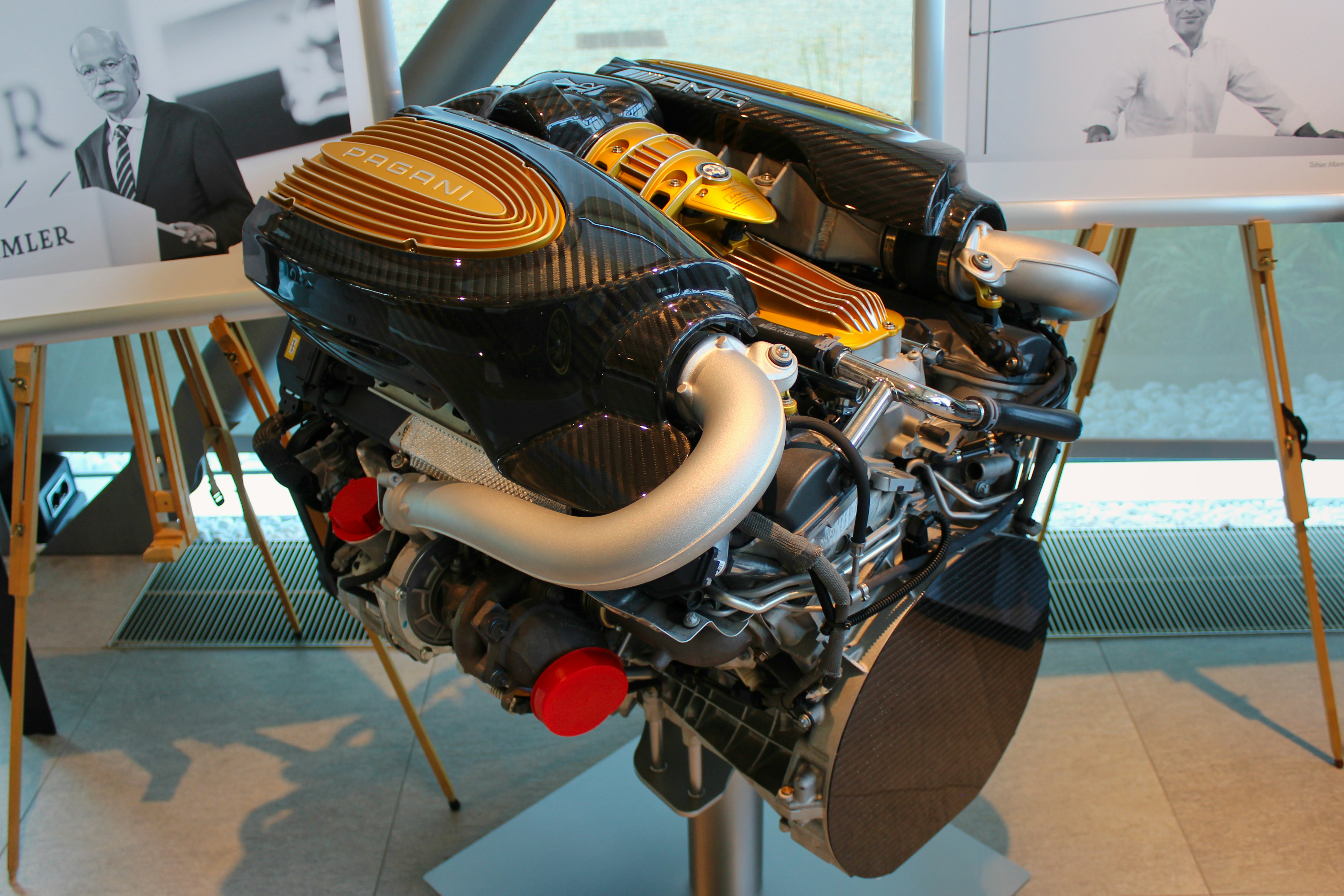
What made the Zonda so special — beyond the performance — was the craftsmanship. Every Zonda contains over 1,000 individual components. The dashboard is machined from a single billet of aluminium. The gear knob is titanium. The exhaust system is hand-welded titanium. The carbon fibre bodywork is laid up by hand, with each panel taking 40–60 hours to produce. Pagani employs a team of watchmakers to assemble the interior. [6]
3. The Huayra Era (2011–2022): Engineering Perfection
The Pagani Huayra (pronounced "why-rah", named after Huayra-tata, the Andean god of wind) debuted at the 2011 Geneva Motor Show. It was the most anticipated hypercar of the decade. Pagani had spent nine years developing it, and the result was extraordinary: a 6.0-litre twin-turbocharged AMG M158 V12 producing 720 hp and 1,000 Nm of torque, a carbon-titanium monocoque weighing just 1,350 kg, and active aerodynamics — four individual flaps that adjust 100 times per second to optimise downforce and drag. [7]
The Huayra was initially banned from sale in the UK because it lacked a pop-up roll bar — a regulation that had never been applied to a car with a carbon monocoque before. Pagani spent two years and millions of euros fighting the regulation before winning an exemption. The episode illustrated both the car's uniqueness and Pagani's determination. [8]
Only 100 Huayra coupes were built, each at $1.4 million. The waiting list was three years. Buyers included Jay Leno, Lewis Hamilton, and numerous Middle Eastern royals. Pagani then introduced the Huayra Roadster (100 units, $2.4M), the Huayra BC (20 units, $2.5M — named after Benny Caiola, Pagani's first customer and closest friend, who died in 2010), and the Huayra BC Roadster (40 units, $3.5M). [9]
The Huayra BC is considered by many to be the greatest road car ever made. It produces 789 hp, weighs 1,218 kg, and laps the Nürburgring in 6:19.7 — faster than the McLaren P1 and the Ferrari LaFerrari. The carbon fibre used in the BC is a proprietary material developed by Pagani called "carbo-titanium" — a weave of carbon fibre and titanium threads that is 20% stronger and 20% lighter than standard carbon fibre. [10]
The Huayra Roadster BC (2019, 40 units, $3.5M) took the concept to its logical extreme: 829 hp, 1,250 kg, and a 0–60 mph time of 2.7 seconds. Each car took six months to build. The waiting list was closed before the car was officially announced. [11]
4. The Utopia (2022–Present): Back to Basics
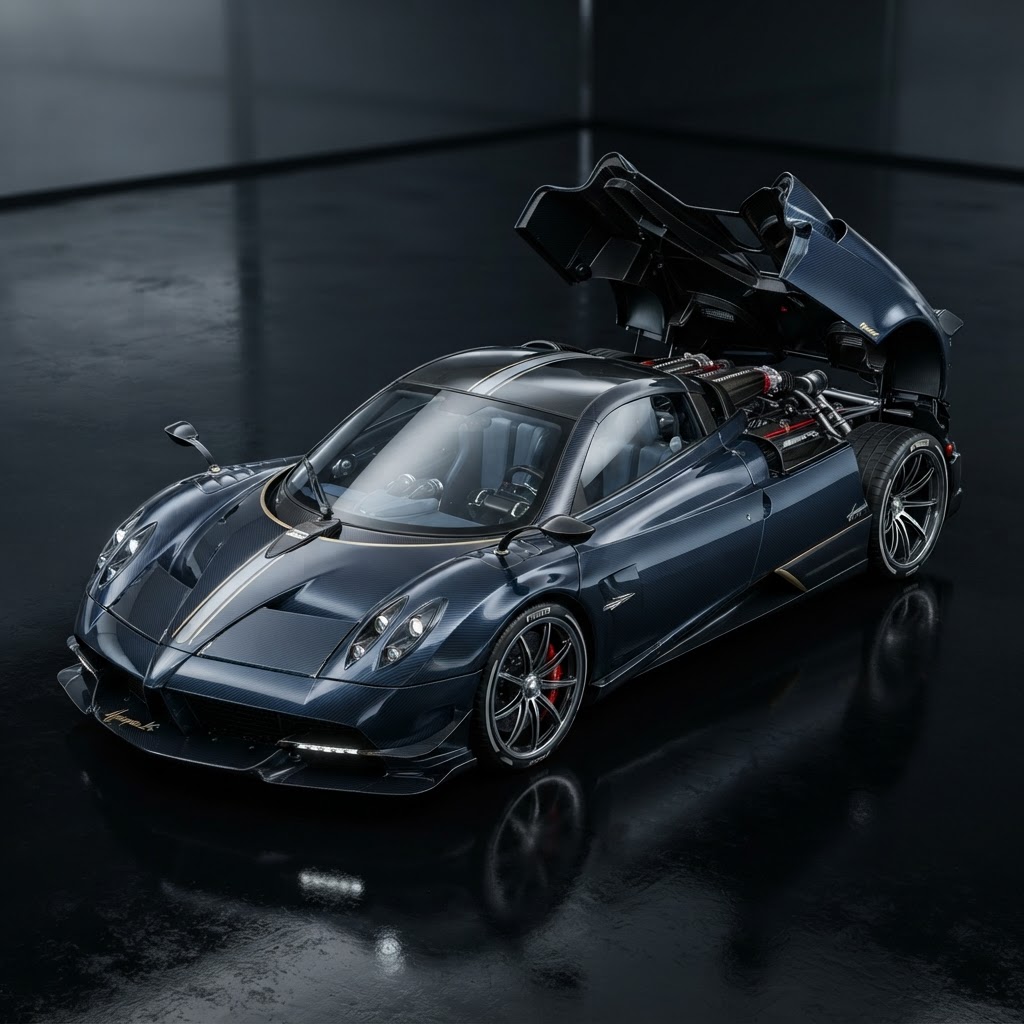
In August 2022, Pagani unveiled the Utopia — and the automotive world stopped. After years of increasingly complex, electronically managed hypercars, Horacio Pagani had built something deliberately analogue. The Utopia uses the same 6.0-litre twin-turbo AMG V12 as the Huayra BC, producing 852 hp and 1,100 Nm of torque. But it is offered with a 7-speed manual gearbox — the first Pagani road car with a manual option since the early Zondas. [12]
The Utopia weighs 1,280 kg and costs €2.2 million ($2.4M at launch). All 99 units sold out within hours of the announcement — before most of the world had even seen the car. By 2026, Utopias are trading on the secondary market at $4–5 million, a near-instant 100% premium. The Utopia Roadster, announced in 2024 and limited to 99 units, is expected to command $6–8M when deliveries begin. [13]
The Utopia's design is a masterclass in restraint. Where the Huayra was dramatic and complex, the Utopia is clean and purposeful. The body is formed from Pagani's proprietary carbo-titanium, with exposed carbon fibre visible through the bodywork. The interior features a bespoke Bovet 1822 clock — a $30,000 timepiece integrated into the dashboard — and a steering wheel machined from a single billet of aluminium. [14]
5. Why Pagani Is So Expensive: The 7 Reasons
Extreme Rarity
Pagani produces fewer than 40 cars per year. Some variants — the Zonda Cinque (5 units), the Zonda Tricolore (3 units), the Zonda Revolucion (5 units) — are rarer than most works of fine art. Total production since 1999 is approximately 550–600 cars. By comparison, Ferrari produces ~14,000 cars per year.
Hand-Built Construction
Every Pagani takes 3–6 months to build. The carbon fibre bodywork alone requires 40–60 hours per panel. The interior is assembled by a team that includes trained watchmakers. There are no robots on the production line. Each car is essentially a bespoke commission.
Proprietary Materials
Pagani developed carbo-titanium — a weave of carbon fibre and titanium threads — specifically for its cars. The material is 20% stronger and 20% lighter than standard carbon fibre and is not available to any other manufacturer. The R&D cost is amortised across fewer than 40 cars per year.
AMG V12 Engines
The Mercedes-AMG M158 V12 is hand-assembled by a single engineer in Affalterbach, Germany. Each engine takes 4 days to build. AMG produces these engines exclusively for Pagani. The engine alone costs more than most supercars.
Bespoke Components
Pagani machines over 1,000 individual components in-house. The gear knob is titanium. The exhaust is hand-welded titanium. The dashboard is machined from a single billet of aluminium. The Utopia includes a $30,000 Bovet 1822 clock. There is no parts-bin sharing with any other manufacturer.
Regulatory Compliance
Meeting global safety and emissions regulations for a car produced in such small numbers is extraordinarily expensive. Pagani spent millions developing crash structures and emissions systems that are used in fewer than 40 cars per year. The per-unit regulatory cost is enormous.
The Pagani Premium
Pagani has cultivated a reputation for being the most exclusive car brand in the world. The company controls its customer list carefully, refusing sales to buyers it deems unsuitable. This artificial scarcity — combined with genuine engineering excellence — creates a premium that compounds over time.
6. Production Data & Rarity: Every Pagani Model
The table below shows every major Pagani model, production numbers, original MSRP, and estimated 2026 market value. Data sourced from Pagani Automobili, RM Sotheby's, Gooding & Company, and Hagerty. [15]
| Model | Years | Units Built | Original MSRP | 2026 Market Value |
|---|---|---|---|---|
| Zonda C12 | 1999–2005 | 25 | $320,000 | $2.5–3.5M |
| Zonda S 7.0 | 2000–2005 | 30 | $380,000 | $1.5–2.2M |
| Zonda S 7.3 | 2005–2007 | 20 | $420,000 | $1.8–2.5M |
| Zonda F Coupe | 2005–2010 | 25 | $670,000 | $3.0–4.5M |
| Zonda F Roadster | 2006–2010 | 25 | $740,000 | $4.0–6.0M |
| Zonda R | 2009–2012 | 15 | $1,500,000 | $5.0–8.0M |
| Zonda Cinque Coupe | 2009–2010 | 5 | $1,800,000 | $10–14M |
| Zonda Cinque Roadster | 2010 | 5 | $1,900,000 | $15–20M |
| Zonda Tricolore | 2010 | 3 | $2,000,000 | $16–22M |
| Zonda Revolucion | 2013 | 5 | $2,900,000 | $12–18M |
| Huayra Coupe | 2011–2018 | 100 | $1,400,000 | $3.5–5.0M |
| Huayra BC | 2016–2018 | 20 | $2,500,000 | $7.0–10M |
| Huayra Roadster | 2017–2022 | 100 | $2,400,000 | $4.0–6.0M |
| Huayra BC Roadster | 2019–2022 | 40 | $3,500,000 | $8.0–12M |
| Utopia | 2022–present | 99 | $2,400,000 | $4.0–5.5M |
Sources: Pagani Automobili, RM Sotheby's, Gooding & Company, Hagerty Price Guide 2026 [15]
Units Built by Model
Total production per variant — illustrating extreme rarity across the Pagani range
Source: Pagani Automobili official production records [1]
Original MSRP vs 2026 Market Value
Selected models — showing appreciation multiples from launch price to current market
Sources: RM Sotheby's, Gooding & Company, Hagerty Price Guide 2026 [15]
7. Investment Performance: Pagani vs S&P 500, Gold & Property
Advertisement
The investment case for Pagani is, on paper, extraordinary. The Zonda C12 (1999, $320,000) is now worth $2.5–3.5M — a CAGR of approximately 13.8% over 27 years. The Zonda Cinque (2009, $1.8M) is worth $10–14M — a CAGR of 18.4%. Both figures comfortably outperform the S&P 500 (10.7% CAGR since 1999), gold (7.2%), and UK property (5.8%). [16]
However, the investment case is more nuanced than the headline numbers suggest. Running costs of $180,000–$280,000 per year must be deducted from any return. A Zonda C12 held for 27 years at $200,000/year in running costs represents $5.4M in total ownership costs — more than the car's current value. The investment case only works if the car is stored, not driven, and if running costs are minimised. [17]
The strongest investment case is for ultra-limited variants: the Zonda Cinque, Tricolore, and Revolucion. These cars are so rare that demand will always exceed supply. The Cinque Roadster (5 built) has never appeared at public auction — all known transactions have been private, at prices believed to exceed $20M. [18]
Zonda C12 vs S&P 500, Gold & Property (1999–2026)
Indexed to 100 at 1999 — showing relative appreciation of each asset class
Sources: Hagerty, Bloomberg, World Gold Council, Knight Frank Wealth Report 2026 [16][17]
CAGR Comparison: Pagani vs Other Assets
Compound annual growth rate from launch year to 2026
Sources: Hagerty, RM Sotheby's, Bloomberg, World Gold Council, Knight Frank [15][16][17]
Investment Tiers: Which Pagani to Buy
Best entry point for first-time Pagani buyers. Established provenance, parts availability improving.
The sweet spot. Huayra BC (20 units) combines extreme rarity with modern engineering and parts support.
Museum-grade assets. Rarely traded publicly. Require specialist storage, insurance, and provenance documentation.
8. Annual Running Costs: What It Really Costs to Own a Pagani
Advertisement
Owning a Pagani is not just about the purchase price. Annual running costs for a Huayra or Zonda typically range from $180,000 to $280,000 per year. The AMG V12 service interval is every 6,000 miles, with a full service costing $30,000–$50,000. Specialist tyres (Pirelli P Zero Corsa, custom-spec) cost $5,000–$8,000 per set and last 3,000–5,000 miles. Insurance for a $3M+ car in the US runs $60,000–$120,000 per year. [19]
Annual Running Cost Breakdown (Huayra, US)
Estimated annual costs for a Pagani Huayra driven 3,000 miles/year — 2026 figures
Sources: Pagani dealer network, Hagerty, specialist insurer estimates 2026 [19]
| Cost Category | Annual (Low) | Annual (High) | Notes |
|---|---|---|---|
| Insurance | $60,000 | $120,000 | Agreed value, specialist insurer |
| Scheduled Service | $30,000 | $60,000 | Every 6,000 miles, AMG V12 |
| Climate Storage | $8,000 | $18,000 | Humidity-controlled, 24/7 security |
| Tyres | $15,000 | $30,000 | Pirelli P Zero Corsa custom-spec |
| Fuel | $5,000 | $12,000 | 3,000 mi @ 12 mpg, premium fuel |
| Detailing / PPF | $8,000 | $20,000 | Annual ceramic coat, PPF refresh |
| Registration / Tax | $3,000 | $10,000 | State-dependent |
| Contingency | $15,000 | $40,000 | Unexpected repairs, parts |
| Total | $144,000 | $310,000 | Full annual ownership cost |
9. Buyer's Guide: How to Buy a Pagani in 2026
Step 1: New vs Pre-Owned
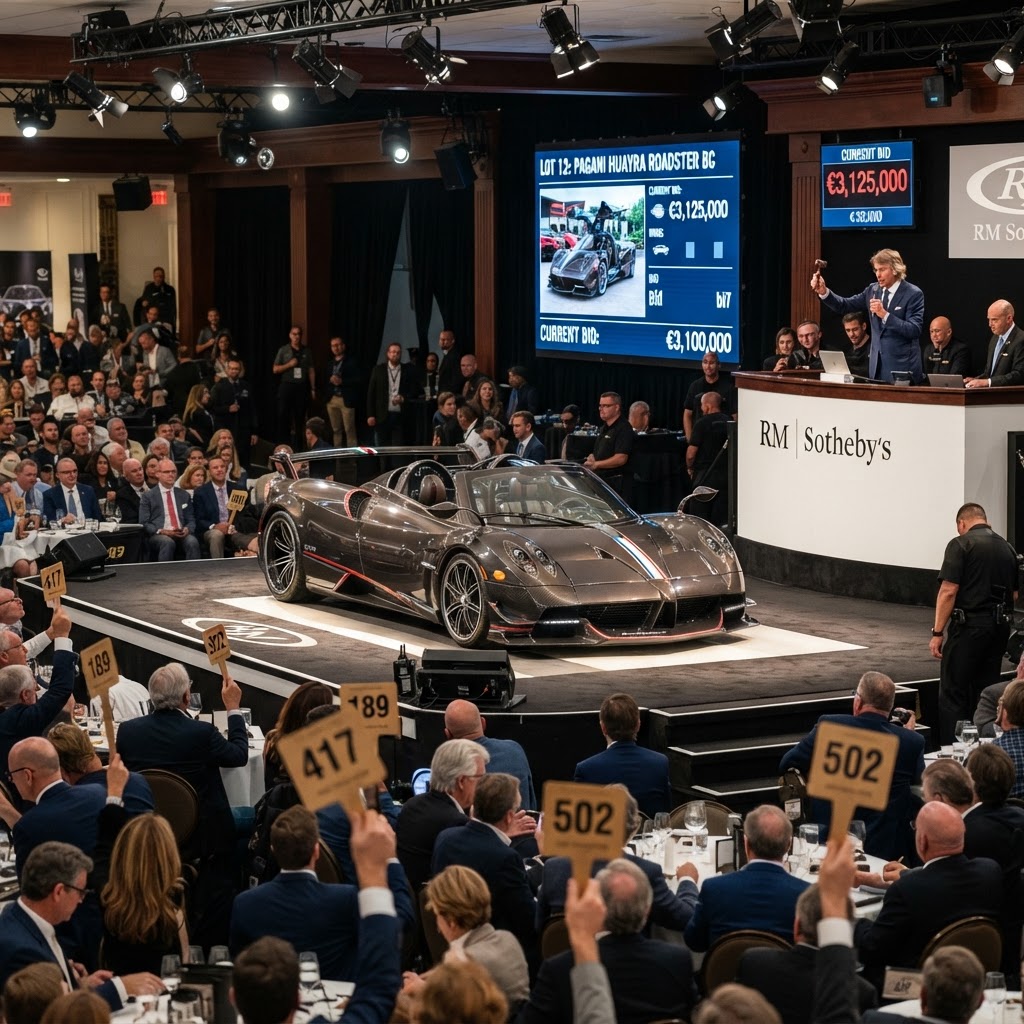
New Paganis are sold exclusively through the factory and a handful of authorised dealers. The waiting list for the Utopia is closed. For new cars, you must submit a formal application to Pagani, provide financial references, and often demonstrate existing supercar ownership. Pagani reserves the right to refuse sales — and exercises it regularly. [20]
Pre-owned Paganis are sold through RM Sotheby's, Gooding & Company, Bonhams, and specialist brokers including Pagani's own certified pre-owned programme. The CPO programme includes a full factory inspection, service, and a 12-month warranty — essential for a car with bespoke components.
Step 2: Provenance & Documentation
Provenance is everything with a Pagani. Demand the full factory build sheet, all service records (ideally factory-stamped), original window sticker, and any correspondence with Pagani Automobili. Cars with gaps in service history or unknown ownership periods carry a significant discount — and for good reason. The AMG V12 requires specialist knowledge to service correctly.
Step 3: Pre-Purchase Inspection
✅ Green Flags
- • Factory build sheet present
- • All service records (factory-stamped)
- • Original owner or known provenance
- • Pagani CPO certification
- • Climate-controlled storage history
- • Under 5,000 miles
- • No accident history (Carfax/HPI)
- • Original paint (no resprays)
🚩 Red Flags
- • Missing or incomplete service history
- • Non-factory respray or colour change
- • Aftermarket modifications
- • Unknown ownership gaps
- • Track use without specialist service
- • Carbon fibre damage or repairs
- • Non-original wheels or exhaust
- • Seller reluctant to allow inspection
Step 4: Specialist Inspection
Always commission a pre-purchase inspection from a Pagani-authorised workshop. In the US, Pagani of Beverly Hills and Pagani of Greenwich are the primary authorised service centres. In the UK, Pagani's UK importer Stratstone handles inspections. Expect to pay $3,000–$8,000 for a comprehensive PPI. This is non-negotiable for any car above $1M.
Step 5: Insurance & Storage
Specialist insurers for Pagani include Hagerty, Chubb, and AXA Art. Agreed-value policies are essential — standard market-value policies will undervalue the car significantly. Climate-controlled storage (18–20°C, 45–55% humidity) is required to preserve the carbon fibre and leather. Budget $8,000–$18,000 per year for specialist storage.
Related Guides on CarCostBreakdown
10. Frequently Asked Questions
Advertisement
Citations & Sources
- Pagani Automobili official company history — pagani.com (2026)
- Autocar: "Pagani Zonda C12 first drive" — autocar.co.uk (1999)
- Car and Driver: "Pagani Zonda F review" — caranddriver.com (2005)
- RM Sotheby's: Zonda Cinque Roadster auction results — rmsothebys.com (2022)
- Nürburgring official lap records — nuerburgring.de (2026)
- Top Gear: "Inside the Pagani factory" — topgear.com (2018)
- Motor Trend: "Pagani Huayra first drive" — motortrend.com (2011)
- BBC: "Pagani Huayra UK ban lifted" — bbc.co.uk (2013)
- Pagani Automobili: Huayra BC press release — pagani.com (2016)
- EVO Magazine: "Huayra BC Nürburgring lap time" — evo.co.uk (2017)
- Autocar: "Pagani Huayra BC Roadster review" — autocar.co.uk (2019)
- Car Magazine: "Pagani Utopia reveal" — carmagazine.co.uk (2022)
- Gooding & Company: Utopia secondary market analysis — goodingco.com (2026)
- Pagani Automobili: Utopia press kit — pagani.com (2022)
- Hagerty Price Guide: Pagani valuations — hagerty.com (2026)
- Bloomberg: Collector car index vs S&P 500 — bloomberg.com (2026)
- Knight Frank Wealth Report 2026 — knightfrank.com
- RM Sotheby's: Zonda Cinque private sale records — rmsothebys.com (2026)
- Hagerty: Exotic car running cost survey — hagerty.com (2026)
- Pagani Automobili: New car purchase process — pagani.com (2026)