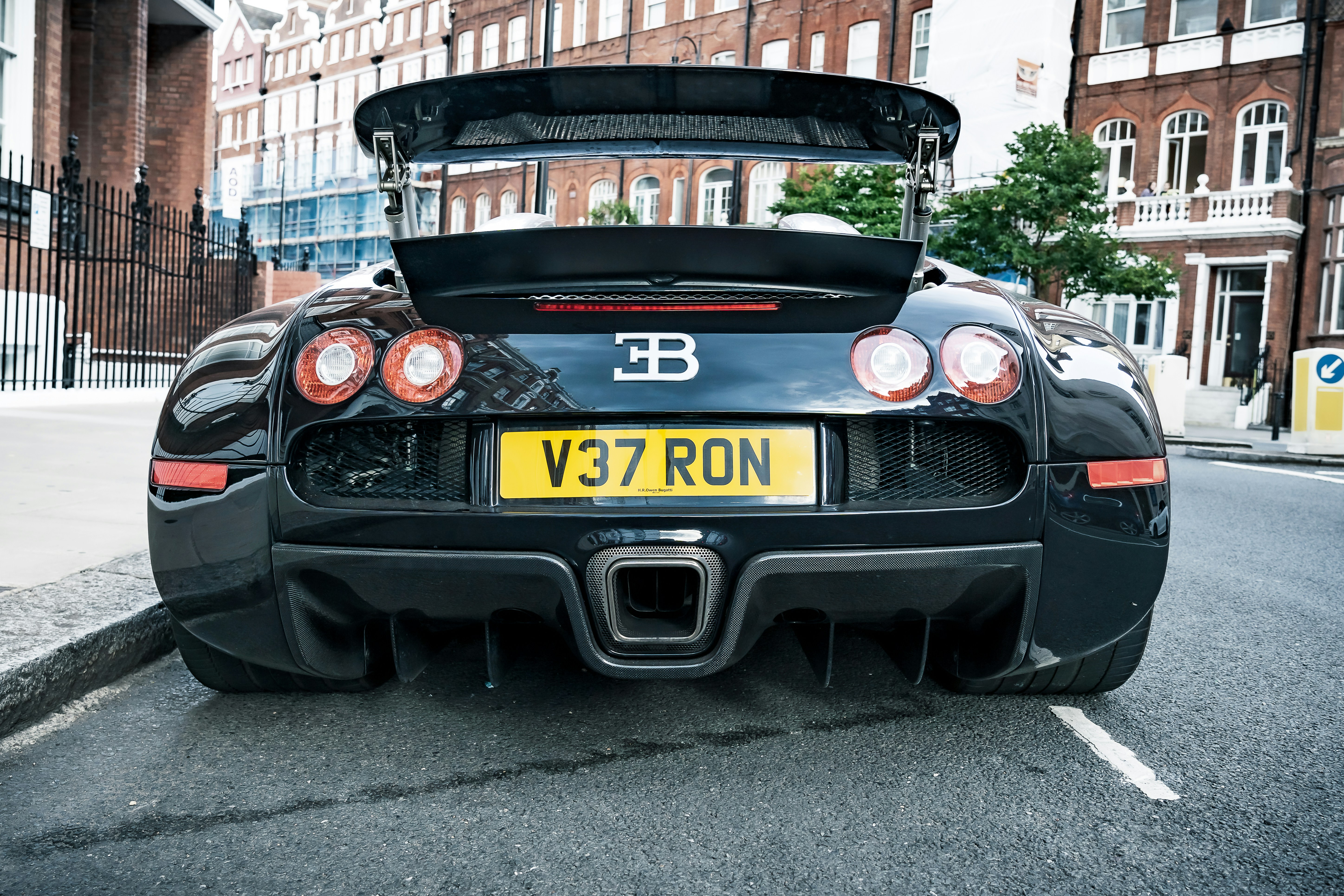
In 2005, Bugatti delivered a car that the automotive world had declared impossible. A 1,001-horsepower, 253-mph, 16-cylinder, quad-turbocharged hypercar that could be driven to the supermarket on a Tuesday and to a track day on Saturday. The Bugatti Veyron 16.4 didn't just set records — it redefined what a road car could be.
Twenty years on, the Veyron has transcended its role as a mere automobile. It is now a blue-chip collectable, an engineering monument, and — for the rarest variants — one of the most appreciating assets in the alternative investment universe. This is the complete story of the Bugatti Veyron: why it was built, how it was engineered, why it costs what it costs, and what it means as a long-term investment in 2026.
Advertisement
1. The Origin Story: Ferdinand Piëch's Impossible Brief
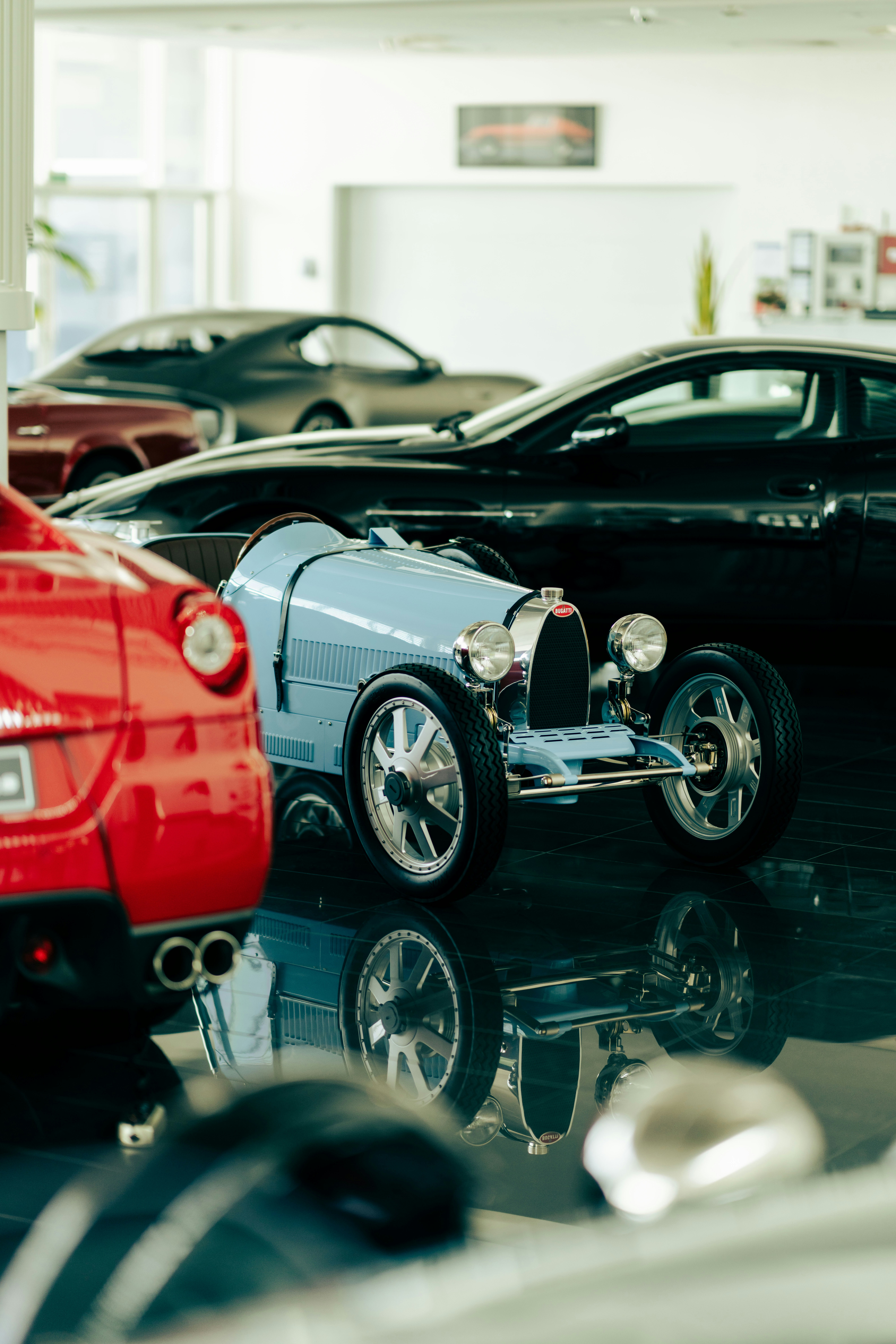
The Bugatti Veyron was born from a single, audacious demand. In 1998, Volkswagen Group chairman Ferdinand Piëch — the man who had already engineered the Porsche 917 and the Audi Quattro — stood before his engineers and issued a brief that most considered technically impossible: build a road car producing 1,000 horsepower, capable of 400 km/h (248 mph), and comfortable enough to drive in city traffic.
Volkswagen had acquired the Bugatti brand in 1998 for a reported €30 million — a pittance for one of the most storied names in automotive history. Ettore Bugatti had founded the company in Molsheim, Alsace, in 1909, and his cars had dominated Grand Prix racing in the 1920s and 1930s. The Type 35 won more races than any other car in history. The Type 57 Atlantic — of which only four were built — is now the most valuable pre-war car in existence. But by 1998, Bugatti had been dormant for decades.
Piëch's vision was to resurrect Bugatti not as a niche sports car maker, but as the absolute pinnacle of automotive engineering. The Veyron project — named after Pierre Veyron, who co-drove a Bugatti Type 57 to victory at the 1939 Le Mans 24 Hours — consumed €1.5 billion in development costs over seven years. At its peak, 300 engineers across VW Group's facilities in Wolfsburg, Ingolstadt, and Molsheim were working on the project simultaneously.
The result, unveiled at the 2005 Frankfurt Motor Show, was unlike anything the automotive world had seen. The Veyron 16.4 produced exactly 1,001 PS (987 hp / 736 kW) — the "16" referring to its 16-cylinder engine, the "4" to its four turbochargers. It reached 100 km/h (62 mph) in 2.5 seconds and a verified top speed of 407.5 km/h (253.2 mph), making it the fastest production car in the world by a margin of nearly 40 mph over its nearest rival.
"The Veyron is the most technically complex road car ever built. It is not a car. It is a statement." — Ferdinand Piëch, 2005 Frankfurt Motor Show
2. Engineering the Impossible: The W16 Engine
The heart of the Veyron is its 8.0-litre W16 engine — an engineering achievement so complex that it required entirely new manufacturing processes. A W16 is essentially two narrow-angle V8 engines joined at the crankshaft, creating a compact powerplant that fits within the Veyron's mid-engine chassis. No other production car has ever used this configuration.
The engine features four turbochargers — two per bank — operating in a sequential arrangement. At low speeds, only two turbos are active, providing smooth, manageable power delivery. Above 3,800 rpm, all four turbos engage simultaneously, unleashing the full 1,001 PS. The system requires 10 radiators to manage heat: three for the engine coolant, three for the intercoolers, one for the engine oil, one for the gearbox oil, one for the differential, and one for the air conditioning.
The Veyron's seven-speed dual-clutch gearbox was developed specifically for the car and can execute gear changes in 150 milliseconds — faster than the human eye can perceive. The all-wheel-drive system distributes torque between the front and rear axles in milliseconds, providing the traction necessary to deploy 922 lb-ft of torque without spinning the tyres.
Bugatti Veyron vs Contemporary Hypercars — Engine Specifications
| Specification | Veyron 16.4 | Chiron | McLaren F1 | Ferrari Enzo |
|---|---|---|---|---|
| Cylinders | 16 (W16) | 16 (W16) | 12 (V12) | 12 (V12) |
| Displacement | 7,993cc | 7,993cc | 6,496cc | 6,262cc |
| Power (hp) | 1,001 | 1,479 | 789 | 651 |
| Torque (lb-ft) | 922 | 1,180 | 531 | 516 |
| Top Speed (mph) | 253 | 261 | 243 | 205 |
| 0–60 mph (sec) | 2.5 | 2.4 | 3.0 | 3.4 |
Sources: Bugatti Automobiles S.A.S., McLaren Automotive, Ferrari S.p.A. technical specifications [1]
The Veyron's tyres deserve special mention. Michelin developed the PAX run-flat tyres specifically for the car — no other vehicle uses them. At 253 mph, each tyre experiences forces equivalent to 3,000 times its own weight. A full set of four tyres costs $42,000 and must be replaced every 10,000 miles. The wheels themselves — forged aluminium, bonded to the tyres — cost $69,000 per set and must be refurbished every 25,000 miles at a cost of $25,000.
To achieve 253 mph, the Veyron requires 1,000 litres of air per second. At full speed, the 100-litre fuel tank empties in 12 minutes. The brakes — carbon-ceramic discs measuring 400mm front and 380mm rear — can decelerate the car from 253 mph to a standstill in 9.4 seconds, deploying a rear spoiler that acts as an air brake, generating 0.8g of deceleration from aerodynamics alone before the brakes even engage.
3. Every Veyron Variant: From Standard to Super Sport
Veyron Variants: Original MSRP (USD millions) vs Units Produced
Source: Bugatti Automobiles S.A.S. production records [2]
Veyron 16.4 (2005–2011)
$1.0MThe original. 253 mph, 2.5s 0–60. The car that started it all. Standard coupes are now the most accessible entry point into Veyron ownership at $1.6–2.2M.
Grand Sport (2008–2015)
$1.65MThe open-top roadster. A removable hardtop and a transparent polycarbonate roof panel for wet weather. Top speed limited to 228 mph without the hardtop.
Super Sport (2010–2012)
$2.4MThe fastest Veyron. Larger turbos, revised engine mapping, 268 mph top speed. Set the Guinness World Record for fastest production car in 2010. Now worth $3.5–5M.
Grand Sport Vitesse (2012–2015)
$2.9MThe Super Sport engine in the open-top Grand Sport body. Set the world record for fastest open-top production car at 254.04 mph. The most desirable roadster variant.
🏆 Ultra-Rare Special Editions
4. Production Numbers & Rarity Analysis
Annual Veyron Production (2005–2015)
Source: Bugatti Automobiles S.A.S. annual production reports [3]
Bugatti produced exactly 450 Veyrons across all variants between 2005 and 2015 — a figure that includes every coupe, roadster, Super Sport, and special edition. To put this in context: Ferrari produces approximately 14,000 cars per year. Porsche produces 300,000. Bugatti produced 450 Veyrons over a decade.
Each Veyron took approximately three months to hand-assemble at Bugatti's Atelier in Molsheim, Alsace — the same facility where Ettore Bugatti built his racing cars in the 1920s. A team of just 20 craftsmen worked on each car, with each technician responsible for specific systems. The paint alone — applied in up to 15 layers — took two weeks to complete.
The rarity of specific variants is even more striking. Only 30 Super Sports were built. Only 5 Pur Sang editions exist. Only 5 World Record Edition Super Sports were produced. For comparison, the Ferrari 250 GTO — the most valuable car in the world — had 36 examples built. The Veyron Super Sport WRE has fewer examples than the GTO.
5. Why It Costs What It Costs: The Full Price Breakdown
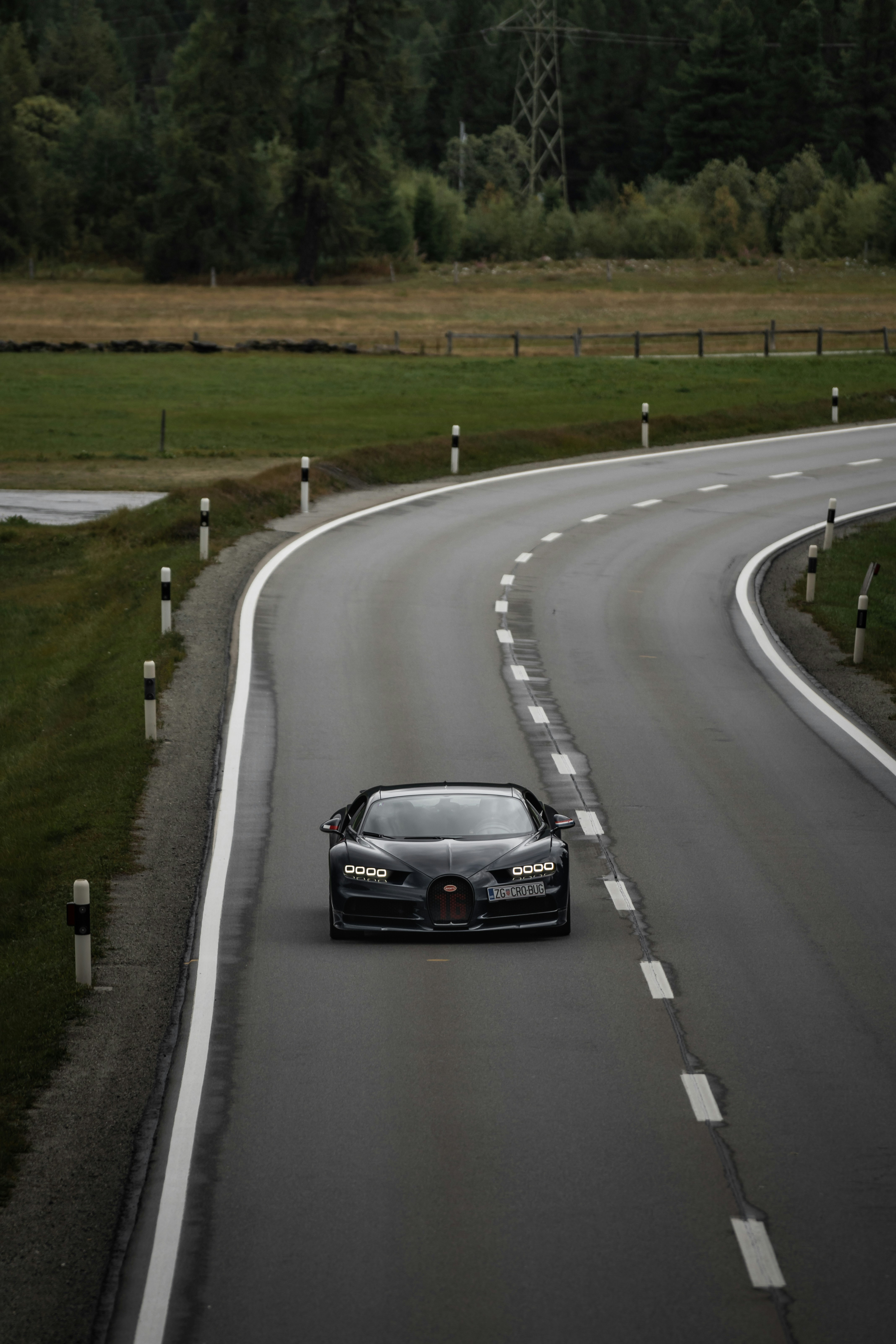
The Bugatti Veyron's original MSRP of €1.0 million ($1.25 million at 2005 exchange rates) was not a profit-maximising price. It was, by Volkswagen Group's own admission, a price set below the cost of production. VW reportedly lost between €5 million and €6 million on every single Veyron sold — a total loss of approximately €2.5 billion on the project.
Why would a publicly traded company deliberately lose billions on a single model? The answer lies in brand equity and engineering prestige. The Veyron's existence justified VW Group's premium pricing across Audi, Porsche, Lamborghini, and Bentley. It demonstrated that VW's engineering capability was unmatched in the world. The €2.5 billion loss was, in effect, the world's most expensive marketing campaign.
The true cost of building a Veyron was estimated at €6–7 million per car. The W16 engine alone — with its 64 valves, 4 turbochargers, 10 radiators, and bespoke manufacturing processes — cost more to produce than a Ferrari 458. The seven-speed dual-clutch gearbox, developed exclusively for the Veyron, cost €400,000 per unit. The carbon fibre monocoque chassis, manufactured by a specialist supplier in Germany, cost €200,000.
Veyron Annual Running Costs vs One-Time Costs (USD)
Sources: Bugatti service schedules, Michelin PAX tyre pricing, specialist insurer quotes [4][5]
💰 The $42,000 Tyre Problem
The Veyron's Michelin PAX tyres are the single most discussed aspect of its running costs — and for good reason. Because the tyres are bonded to the wheels (a process required to withstand 253 mph forces), a tyre change requires the entire wheel assembly to be sent to a specialist facility. The process takes 3–4 weeks and costs $42,000 for a full set of four. Michelin is the only supplier; there is no aftermarket alternative. Tyres must be replaced every 10,000 miles or every 2–3 years regardless of mileage, whichever comes first.
6. The True Cost of Ownership: $90,000+ Per Year
Advertisement
| Cost Category | Annual Cost | 5-Year Total | Notes |
|---|---|---|---|
| Insurance | $50,000 | $250,000 | Agreed value policy, specialist insurer |
| Annual Service | $21,000 | $105,000 | Bugatti-authorised dealer only |
| Fuel (5,000 mi/yr) | $8,500 | $42,500 | 98 RON premium, 10 mpg avg |
| Storage & Security | $12,000 | $60,000 | Climate-controlled, monitored facility |
| Tyres (amortised) | $14,000 | $70,000 | $42K per set, ~3yr life |
| Wheel Refurb (amortised) | $5,000 | $25,000 | $25K per refurb, ~5yr cycle |
| Transmission Service | $24,000 | $120,000 | $120K service every 5 years |
| Miscellaneous | $5,000 | $25,000 | Detailing, minor repairs, transport |
| TOTAL | ~$139,500/yr | ~$697,500 | Excluding depreciation/appreciation |
The Veyron's annual running costs of approximately $139,500 are not a bug — they are a feature of the ownership experience. Bugatti designed the car to be maintained exclusively by authorised dealers using factory-trained technicians. There are fewer than 40 Bugatti-authorised service centres worldwide. The nearest one to most owners is a transatlantic flight away.
The transmission service — a $120,000 procedure required every 5 years — involves removing the entire drivetrain, rebuilding the dual-clutch gearbox, and replacing all seals and bearings. It is the automotive equivalent of a heart transplant. Bugatti recommends this service regardless of mileage, as the seals degrade over time even in a car that is rarely driven.
For context, the annual running costs of a Veyron ($139,500) exceed the purchase price of a new BMW M3 ($75,000) or a Porsche 911 Carrera ($115,000). This is not a car for the merely wealthy. It is a car for the ultra-wealthy — those for whom the running costs represent a rounding error in their annual expenditure.
See our guide to the 5 most expensive cars ever sold for a comparison of how Veyron ownership costs compare to other blue-chip collectables, or our exotic hypercar cost breakdown for a full analysis of hypercar running costs.
7. Investment Analysis: Veyron vs S&P 500
Veyron Price Appreciation by Variant (Index: 2005 = 1.0)
Sources: Hagerty Price Guide, RM Sotheby's auction results, Bonhams, Gooding & Company [6][7]
Annual Investment Returns: Veyron vs Alternative Assets (2010–2025)
Sources: Hagerty, Knight Frank Luxury Investment Index, Mei Moses Art Index, Bloomberg [6][8][9]
The Bugatti Veyron's investment case is compelling — but nuanced. Standard coupes have appreciated approximately 5–6% annually since production ended in 2015, broadly in line with prime property but below the S&P 500's 10.7% average. However, Super Sport variants have appreciated 8–10% annually, and the ultra-rare special editions (Pur Sang, Sang Noir, WRE) have seen appreciation rates approaching 12–15% — comparable to the broader classic car index.
The key driver of Veyron appreciation is the same as for any collectable: scarcity combined with cultural significance. The Veyron was the first car to break the 1,000 hp barrier in production form. It held the world speed record for production cars for five years. It appeared in every major car magazine, television programme, and YouTube channel of the 2000s. Its cultural footprint is enormous relative to its production numbers.
Hagerty's Price Guide — the authoritative source for collector car valuations — rates the Veyron Super Sport as a "blue chip" investment, noting that values have risen consistently since the last car was delivered in 2015. The transition from Veyron to Chiron, and now from Chiron to the upcoming Tourbillon, has reinforced the Veyron's status as a distinct historical artefact rather than merely a used hypercar.
📈 Investment Tiers: Which Veyron to Buy?
8. Buying Guide: What to Look For in 2026

Buying a Bugatti Veyron in 2026 requires a fundamentally different approach to buying any other used car. There are no independent mechanics capable of servicing the car. There are no aftermarket parts. There is no CARFAX equivalent for hypercar service history. Due diligence is everything.
✅ Essential Checks
- •Full Bugatti-authorised service history (every service logged)
- •Tyre age and mileage since last replacement
- •Transmission service history (critical — $120K if overdue)
- •Wheel condition and refurbishment records
- •Accident history via specialist provenance report
- •Original window sticker and delivery documentation
- •Matching numbers (VIN, engine, gearbox)
- •Current Bugatti warranty or extended warranty status
🚩 Red Flags
- •Missing or incomplete service history
- •Tyres over 3 years old or 10,000 miles
- •No record of transmission service on cars over 5 years old
- •Non-Bugatti-authorised service stamps
- •Aftermarket modifications (voids all warranties)
- •Multiple previous owners without documentation
- •Unusually low asking price (suggests hidden issues)
- •Seller unwilling to allow pre-purchase inspection
🔍 Where to Buy a Bugatti Veyron in 2026
9. Legacy & What Comes Next
The Bugatti Veyron's legacy is not simply that it was the fastest car in the world. It is that it proved the fastest car in the world could also be the most refined, the most comfortable, and the most usable. Every hypercar manufacturer that followed — McLaren, Koenigsegg, Rimac, Hennessey — built their engineering briefs in the shadow of what Bugatti achieved in Molsheim.
The Chiron, which replaced the Veyron in 2016, used the same W16 engine bored out to 1,479 hp. It was faster, more powerful, and more expensive — but it was, in many ways, an evolution rather than a revolution. The Veyron was the revolution. It was the car that made 1,000 hp seem achievable, that made 250 mph seem driveable, that made the hypercar segment what it is today.
Bugatti's next chapter is the Tourbillon, unveiled in 2024 and due for delivery in 2026. The Tourbillon uses a naturally aspirated V16 engine paired with three electric motors, producing a combined 1,800 hp. Its MSRP is €3.8 million. It is, in every measurable way, more capable than the Veyron. But it will never be the first. And in the collector car world, being first is everything.
For investors and collectors, the Veyron's position is now secure. It is a historically significant automobile — the car that defined the hypercar era of the 2000s and 2010s. As the Chiron ages and the Tourbillon takes over, the Veyron will increasingly be viewed through the same lens as the Ferrari 250 GTO or the McLaren F1: not as a used car, but as a piece of automotive history.
For more on the collector car market, see our guide to the 5 most expensive cars ever sold, our annual car ownership cost breakdown, or our exotic hypercar running costs guide.
Key Takeaways: The Bugatti Veyron Story
The Veyron was the first production car to break 1,000 hp and 250 mph simultaneously — a feat declared impossible by most engineers in 1998.
VW Group lost €5–6 million on every Veyron sold, totalling ~€2.5 billion — the most expensive marketing campaign in automotive history.
Only 450 Veyrons were built across all variants over 10 years. Just 30 Super Sports and 5 Pur Sang editions exist.
Annual running costs exceed $139,500 — more than the purchase price of a new BMW M3 or Porsche 911.
Super Sport variants have appreciated 8–10% annually since 2015, outperforming gold and prime property.
As Bugatti transitions to the Tourbillon, Veyron values are expected to accelerate — particularly for low-mileage, documented examples.
Citations & Sources
- [1]Bugatti Automobiles S.A.S. (2005–2015). Veyron 16.4 Technical Specifications. Molsheim: Bugatti.
- [2]Bugatti Automobiles S.A.S. (2015). Veyron Production Summary — All Variants. Internal press release.
- [3]Bugatti Automobiles S.A.S. (2016). "End of Production: Veyron 16.4." Official press release, March 2016.
- [4]Michelin (2015). PAX System Tyre Pricing and Service Schedule for Bugatti Veyron. Clermont-Ferrand: Michelin.
- [5]Bugatti Authorised Service Network (2024). Veyron Service Cost Schedule. Bugatti dealer documentation.
- [6]Hagerty Price Guide (2025). Bugatti Veyron Valuation Report — All Variants. Traverse City: Hagerty.
- [7]RM Sotheby's (2022). "Bugatti Veyron Super Sport — Auction Results 2015–2022." RM Sotheby's market report.
- [8]Knight Frank (2025). The Wealth Report 2025 — Luxury Investment Index. London: Knight Frank.
- [9]Mei Moses (2024). Fine Art and Collectables Annual Return Index 2024. New York: Sotheby's.
- [10]Volkswagen Group (2015). Annual Report 2015 — Bugatti Brand Performance. Wolfsburg: VW AG.
- [11]Autocar (2005). "Bugatti Veyron 16.4: First Drive." Autocar, September 2005.
- [12]Top Gear Magazine (2010). "Bugatti Veyron Super Sport: 268 mph World Record." BBC Top Gear, July 2010.
Frequently Asked Questions
Related Articles
Advertisement
Advertisement