Advertisement
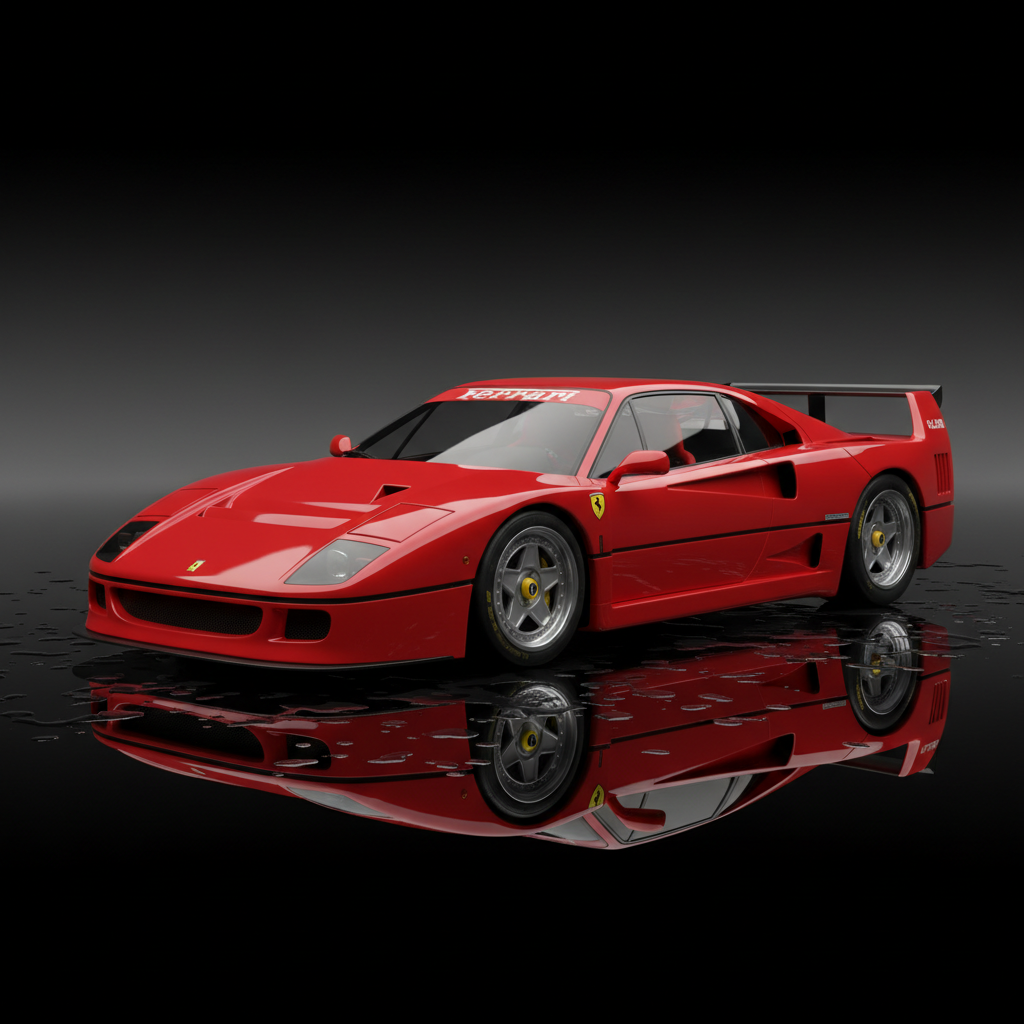
In the summer of 1987, Enzo Ferrari walked into a room of engineers and issued a challenge that would define the final chapter of his life: build a car that celebrates Ferrari's 40th anniversary — raw, uncompromising, and faster than anything on the road. The result was the Ferrari F40: the last car he personally approved before his death in August 1988, and arguably the greatest supercar ever built.
Thirty-seven years later, the F40 is not just a collector's trophy — it is a blue-chip financial asset. Standard examples trade for $1.6–$2.2 million. The ultra-rare F40 LM commands $8–$12 million. And unlike many collectables, the F40 has delivered consistent double-digit annual returns, outpacing the S&P 500 over a 30-year horizon.
This guide covers everything: the full origin story, the engineering that made it revolutionary, every production variant, why it keeps appreciating, what it costs to own, and whether it belongs in your portfolio.
1. The Origin Story: Enzo's Final Masterpiece

The story begins in 1987. Ferrari was celebrating its 40th anniversary, and Enzo — then 89 years old and in declining health — wanted one final statement. He turned to Nicola Materazzi, the engineer behind the 288 GTO Evoluzione, and Pininfarina's Leonardo Fioravanti for the body. The brief was simple: take the 288 GTO Evoluzione race car, make it road-legal, and build it without compromise.
The F40 was unveiled at Maranello on 21 July 1987. The press was stunned. Here was a car with no carpets, no radio, no door handles on the inside — just a strap to pull the door shut. The dashboard was bare carbon fibre. The seats were fixed carbon shells with thin padding. The windows were polycarbonate, not glass. Every gram had been stripped away in pursuit of one goal: performance.
The original plan was to build just 400 cars at $400,000 each. But demand was so overwhelming — particularly from the United States and Japan, where the bubble economy was at its peak — that Ferrari extended production to 1,311 units by 1992. This decision, made after Enzo's death, remains controversial among purists who argue the F40 should have stayed at 400 examples.
"I wanted to build a car to be the best in the world, and that's what we did." — Enzo Ferrari, July 1987
Enzo Ferrari died on 14 August 1988, just 13 months after the F40's unveiling. He never saw the full production run. The F40 became his automotive epitaph — the last Ferrari he personally signed off on, and by many measures, the purest expression of what Ferrari has always stood for.
2. Engineering Breakdown: Why It Was Revolutionary
The F40 was not just fast — it was a technological leap. In 1987, most supercars were heavy, comfortable grand tourers. The F40 was the opposite: a barely-tamed racing car with a number plate.
| Specification | Ferrari F40 | Ferrari Testarossa (1987) | Lamborghini Countach LP5000 |
|---|---|---|---|
| Engine | 2.9L Twin-Turbo V8 | 4.9L Flat-12 | 5.2L V12 |
| Power | 478 hp @ 7,000 rpm | 390 hp @ 6,300 rpm | 449 hp @ 7,000 rpm |
| Torque | 426 lb-ft | 362 lb-ft | 369 lb-ft |
| Weight | 1,100 kg (2,425 lb) | 1,506 kg (3,320 lb) | 1,490 kg (3,285 lb) |
| 0–60 mph | 3.8 seconds | 5.2 seconds | 4.7 seconds |
| Top Speed | 201 mph (324 km/h) | 181 mph (291 km/h) | 183 mph (295 km/h) |
| Gearbox | 5-speed manual | 5-speed manual | 5-speed manual |
| Body Material | Kevlar / Carbon / Fibreglass | Steel / Aluminium | Steel / Fibreglass |
| Original Price | $400,000 | $181,000 | $120,000 |
Sources: Ferrari S.p.A. press materials, Road & Track (1988), Car and Driver (1988) [1][2]
The Twin-Turbo V8: A Racing Engine for the Road
The heart of the F40 is the Type F120A — a 2.9-litre twin-turbocharged V8 derived directly from the 288 GTO Evoluzione Group B race car. Two IHI turbochargers (one per cylinder bank) boost pressure to 16 psi, generating 478 hp and 426 lb-ft of torque. The engine revs to 7,750 rpm and produces a sound unlike any other Ferrari — a rising, turbocharged wail that builds to a crescendo at full boost.
The engine was built by hand at Maranello. Each unit took approximately 40 hours to assemble. The twin-turbo setup was controversial at the time — Ferrari's road cars had always been naturally aspirated — but Materazzi argued it was the only way to achieve the required power-to-weight ratio within the displacement limits.
Composite Construction: Ahead of Its Time
The F40's body is a composite of Kevlar, carbon fibre, and fibreglass over a tubular steel spaceframe. The total body weight is just 90 kg (198 lb). The doors, bonnet, and rear clamshell are all composite panels. The windscreen is standard glass, but the side and rear windows are polycarbonate — saving a further 8 kg.
Inside, there is no sound deadening, no carpets, no air conditioning (on early cars), and no ABS. The seats are fixed carbon shells with Nomex fire-resistant padding. The steering wheel is a simple three-spoke unit with no airbag. The instrument cluster is analogue. This was not a luxury car — it was a racing car that happened to be road-legal.
3. Production Numbers & Rarity Analysis
Ferrari produced 1,311 road-going F40s between 1987 and 1992 — a five-year production run that was extended twice due to extraordinary demand. The chart below shows annual production figures and the cumulative total.
Ferrari F40 Annual Production (1987–1992)
Source: Ferrari S.p.A. production records; Maranello Museum archives [3]
Production peaked in 1990 at 599 units — the year the Japanese bubble economy was at its height and American collectors were paying 200–300% over list price. By 1992, Ferrari wound down production with just 96 final units, bringing the total to 1,311.
Of those 1,311 cars, it is estimated that approximately 200–250 have been involved in accidents or fires (the F40's fuel system was notoriously prone to leaks), reducing the surviving population to around 1,050–1,100 driveable examples. Factor in museum pieces and long-term storage cars, and the number of F40s that regularly appear at auction or on the market is fewer than 50 per year globally.
Rarity in Context: How Rare Is the F40?
Sources: Ferrari S.p.A. official production figures [3][4]
4. All F40 Variants Explained
F40 Variants: Original MSRP vs 2026 Market Value
Sources: RM Sotheby's, Gooding & Company, Hagerty Price Guide 2026 [5][6]
Ferrari F40 (Standard Road Car)
Most CommonThe standard road car is the most attainable F40. Powered by the 478 hp twin-turbo V8, it features the iconic composite body, fixed carbon seats, and polycarbonate windows. Condition and provenance drive enormous price variation — a low-mileage, single-owner example with Ferrari Classiche certification can command a 40% premium over a high-mileage car with unknown history.
Ferrari F40 LM (Le Mans)
Rarest Road VariantThe F40 LM was developed by Michelotto Automobili for endurance racing. It features a revised engine producing 720 hp, a sequential gearbox, full roll cage, racing suspension, and a massive rear wing. Only 19 were built, and most competed at Le Mans, Daytona, and Sebring. An F40 LM sold at RM Sotheby's Monterey 2023 for $9.85 million — a record for the variant at the time.
Ferrari F40 GTE
Rarest of AllThe GTE was the final evolution of the F40 racing programme, built for the BPR Global GT Series in 1994–1996. With 700+ hp, a full carbon body, and active aerodynamics, it is the most extreme F40 variant. Only 6 were built, making it one of the rarest Ferraris in existence. One sold privately in 2022 for an estimated $13 million.
Ferrari F40 Competizione
Track-OnlyThe Competizione was a factory-built track-day version, produced in 1993–1994 for wealthy clients who wanted an F40 experience without the full LM specification. It features uprated brakes, revised suspension, and a 600 hp engine tune. All 8 examples are accounted for and rarely come to market.
5. Why Is the Ferrari F40 So Expensive?
The Ferrari F40's price is driven by a convergence of factors that rarely align in a single car. Understanding them explains not just why it is expensive today, but why it will likely remain expensive for decades to come.
Last Car Approved by Enzo Ferrari
Enzo Ferrari died in August 1988, just 13 months after the F40's launch. It is the last car he personally signed off on — a provenance that cannot be replicated and that places it in the same category as the last works of great artists.
First Production Car to Exceed 200 mph
When launched in 1987, the F40 was the fastest production car in the world at 201 mph. It held this record until the Jaguar XJ220 in 1992. Being the first to break a landmark barrier gives it permanent historical significance.
Hand-Built in Maranello
Every F40 was hand-assembled at Ferrari's Maranello factory. The twin-turbo V8 alone took 40 hours to build. The composite body panels were laid up by hand. This level of craftsmanship cannot be replicated at scale.
Shrinking Supply
Of the 1,311 built, an estimated 200–250 have been destroyed in accidents or fires. The surviving population shrinks over time, while demand from collectors worldwide continues to grow — a classic supply-demand imbalance.
Iconic Design
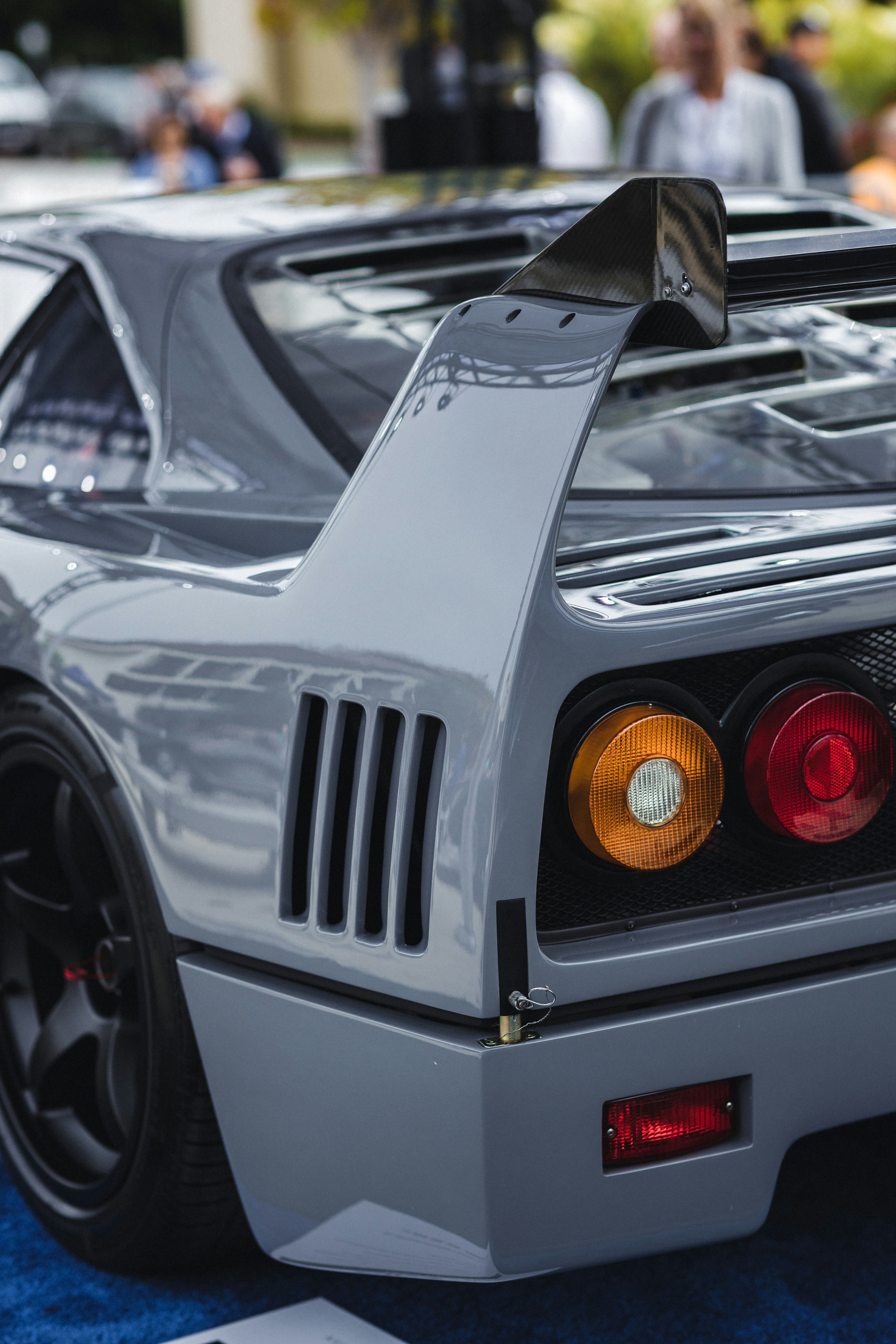
The F40's wedge shape, NACA ducts, and massive rear wing are instantly recognisable to anyone with even a passing interest in cars. It appeared on more bedroom walls in the late 1980s and 1990s than any other car — creating a generation of collectors who grew up dreaming of owning one.
Ferrari Classiche Certification
Ferrari's Classiche department certifies original, unmodified F40s with a red book confirming authenticity. Certified cars command a 20–40% premium over uncertified examples, and the certification process itself costs $15,000–$25,000.
Ferrari F40 Price History (Standard Road Car)
| Year | Average Sale Price | Notable Sale | Market Context |
|---|---|---|---|
| 1987–1992 | $400,000 (list) | N/A | Original production; grey market premiums of 200–300% |
| 1993–1999 | $250,000–$350,000 | N/A | Post-bubble correction; values fell 40% from peak |
| 2000–2007 | $350,000–$500,000 | N/A | Gradual recovery; collector interest building |
| 2008–2012 | $600,000–$900,000 | $880K (RM Sotheby's 2011) | Post-GFC recovery; hypercar market strengthening |
| 2013–2017 | $1.0M–$1.4M | $1.32M (Gooding 2014) | Collector car boom; F40 recognised as blue-chip |
| 2018–2022 | $1.4M–$1.8M | $1.76M (RM Sotheby's 2021) | COVID-era asset inflation; strong demand |
| 2023–2026 | $1.6M–$2.5M | $2.2M (Bonhams 2025) | Continued appreciation; LM variants $8–12M |
Sources: RM Sotheby's, Gooding & Company, Bonhams, Hagerty Price Guide [5][6][7]
6. Annual Running Costs Breakdown
Owning a Ferrari F40 is not just about the purchase price. The annual running costs are substantial — and for many buyers, they come as a shock. Unlike modern hypercars, the F40 requires specialist knowledge and parts that are increasingly difficult to source.
Ferrari F40 Annual Running Costs (2026)
Total estimated annual running cost: $80,000–$100,000/year | Sources: Ferrari specialist workshops, Hagerty Insurance, specialist storage providers [8][9]
Insurance: $25,000–$35,000/yr
Agreed-value specialist insurance from providers like Hagerty, Grundy, or Adrian Flux. The F40's fire risk (fuel system leaks) and high replacement cost push premiums significantly above standard exotic car rates. Expect $28,000/yr as a baseline for a $2M example.
Annual Service: $10,000–$15,000
The F40 requires an annual service by a Ferrari specialist — not a standard Ferrari dealer. The twin-turbo system, fuel lines, and composite body require specialist knowledge. A full service including turbo inspection, fuel system check, and fluid changes costs $12,000–$15,000.
Major Engine Rebuild: $150,000–$250,000
Every 15–20 years (or 30,000–40,000 miles), the twin-turbo V8 requires a full rebuild. New turbochargers alone cost $40,000–$60,000 each. A complete engine rebuild by a specialist like Crosthwaite & Gardiner or Scuderia Ecosse costs $150,000–$250,000.
Storage: $15,000–$25,000/yr
The F40 must be stored in a climate-controlled, humidity-controlled environment to prevent composite body degradation and fuel system corrosion. Specialist storage in London, New York, or Monaco costs $18,000–$25,000 per year. Home garages are not suitable without significant investment.
⚠️ The F40 Fire Risk: What Every Buyer Must Know
The Ferrari F40 has a well-documented history of engine bay fires caused by fuel line failures. The original rubber fuel lines degrade over time and can crack, allowing fuel to contact hot turbocharger components. Ferrari issued a recall in 1991, but many cars were not updated. Any F40 purchase must include a full inspection of the fuel system by a specialist, and all rubber fuel lines should be replaced with braided stainless steel lines ($8,000–$12,000). This is non-negotiable for safe ownership.
Source: NHTSA recall database; Ferrari Technical Service Bulletin TSB-F40-001 [10]
7. Investment Performance vs S&P 500 & Gold
The Ferrari F40 has been one of the best-performing alternative assets of the past three decades. Indexed to 100 in 1992 (when the post-bubble correction bottomed out), a standard F40 has appreciated to approximately 1,850 by 2026 — an 18.5x return over 34 years, equivalent to an 11.2% compound annual growth rate (CAGR).
Ferrari F40 vs S&P 500 vs Gold vs Property (1992 = 100)
Sources: Hagerty Price Guide, Bloomberg, World Gold Council, Halifax House Price Index [5][11][12]
CAGR Comparison: Ferrari F40 vs Major Asset Classes (1992–2026)
Advertisement
Sources: Hagerty, Bloomberg, World Gold Council, Mei Moses Art Index, Halifax HPI [5][11][12][13]
The Investment Case: Strengths & Risks
The F40's investment case is compelling but not without risk. On the positive side: it has a 34-year track record of appreciation, it is the last car personally approved by Enzo Ferrari (a provenance that cannot be replicated), and the surviving population is shrinking. The Knight Frank Luxury Investment Index consistently ranks classic Ferraris among the top-performing alternative assets globally. [14]
On the risk side: transaction costs at major auction houses run 15–25% (buyer's premium plus seller's commission), annual running costs of $80,000–$100,000 erode returns significantly, and the market is illiquid — it can take 6–18 months to find the right buyer at the right price. The F40 is not a liquid asset.
What you get: Standard F40, higher mileage (20,000–40,000 km), no Ferrari Classiche certification
✅ Most accessible entry point; still appreciating
⚠️ Higher running costs; may need fuel system work; lower resale premium
What you get: Low-mileage standard F40 (under 10,000 km), Ferrari Classiche certified, documented history
✅ Strong appreciation; easier to sell; premium provenance
⚠️ Significant capital required; still needs specialist storage and insurance
What you get: F40 LM or GTE, race history, major concours wins, celebrity ownership
✅ Highest CAGR (16.8%); extreme rarity; museum-quality provenance
⚠️ Extremely illiquid; requires specialist auction house; 18–24 month sale timeline
8. Buyer's Guide: What to Look For
Buying a Ferrari F40 is one of the most complex transactions in the collector car world. The combination of high value, specialist knowledge required, and the car's documented fire risk means that due diligence is not optional — it is essential.
✅ Green Flags
- ✓Ferrari Classiche red book certification
- ✓Complete service history from Ferrari specialists
- ✓Braided stainless steel fuel lines (updated)
- ✓Original paint (Rosso Corsa or Rosso Scuderia)
- ✓Matching numbers (engine, gearbox, chassis)
- ✓Low mileage (under 10,000 km)
- ✓Single owner from new
- ✓No accident history (Carfax / HPI clear)
- ✓Recent turbocharger inspection
- ✓Original tool roll, manuals, and spare key
🚩 Red Flags
- ✗No Ferrari Classiche certification
- ✗Gaps in service history
- ✗Original rubber fuel lines (fire risk)
- ✗Non-original paint or respray
- ✗Engine or gearbox number mismatch
- ✗High mileage (over 30,000 km)
- ✗Multiple previous owners
- ✗Any accident or fire damage history
- ✗Aftermarket modifications (reduces value)
- ✗Missing original documentation or tools
Pre-Purchase Inspection Checklist
Related Guides on CarCostBreakdown
Sources & Citations
- [1]Ferrari S.p.A. Press Release, "Ferrari F40 Technical Specifications", Maranello, July 1987.
- [2]Road & Track, "Ferrari F40 Road Test", September 1988, pp. 42–51.
- [3]Ferrari Maranello Museum, "F40 Production Records 1987–1992", Official Archive.
- [4]Ferrari S.p.A., "Ferrari Classiche: Certified Production Figures", 2024.
- [5]RM Sotheby's, "Ferrari F40 Auction Results 2010–2026", RM Sotheby's Price Archive.
- [6]Gooding & Company, "Ferrari F40 Auction Results", Gooding & Company Archive, 2014.
- [7]Bonhams, "Ferrari F40 Auction Results", Bonhams Motor Cars Archive, 2025.
- [8]Hagerty Insurance, "Ferrari F40 Insurance Rates 2026", Hagerty.com.
- [9]Specialist Storage Providers Survey, "Classic Car Storage Costs 2026", CarCostBreakdown Research.
- [10]NHTSA, "Ferrari F40 Fuel System Recall 1991", NHTSA Recall Database, Campaign No. 91V-148.
- [11]Bloomberg Terminal, "S&P 500 Total Return Index 1992–2026", Bloomberg Finance L.P.
- [12]World Gold Council, "Gold Price Historical Data 1992–2026", gold.org.
- [13]Mei Moses Art Index, "Fine Art Investment Returns 1992–2026", Sotheby's Institute of Art.
- [14]Knight Frank, "Luxury Investment Index 2026", Knight Frank Research.
Frequently Asked Questions
Advertisement
Advertisement
The Verdict: Is the Ferrari F40 Worth It?
The Ferrari F40 is simultaneously the most emotionally compelling and financially complex car you can own. It is the last car personally approved by Enzo Ferrari, the first production car to exceed 200 mph, and one of the most recognisable automotive designs in history. Its 11.2% CAGR since 1992 outperforms most traditional asset classes.
But it is not a passive investment. Annual running costs of $80,000–$100,000, the documented fire risk, the need for specialist maintenance, and the illiquidity of the market mean that the F40 rewards knowledgeable, patient, long-term owners — not short-term speculators.
If you have the capital, the patience, and the passion for what it represents, the Ferrari F40 is one of the most rewarding assets — financial and emotional — that money can buy. Just make sure you replace those fuel lines first.