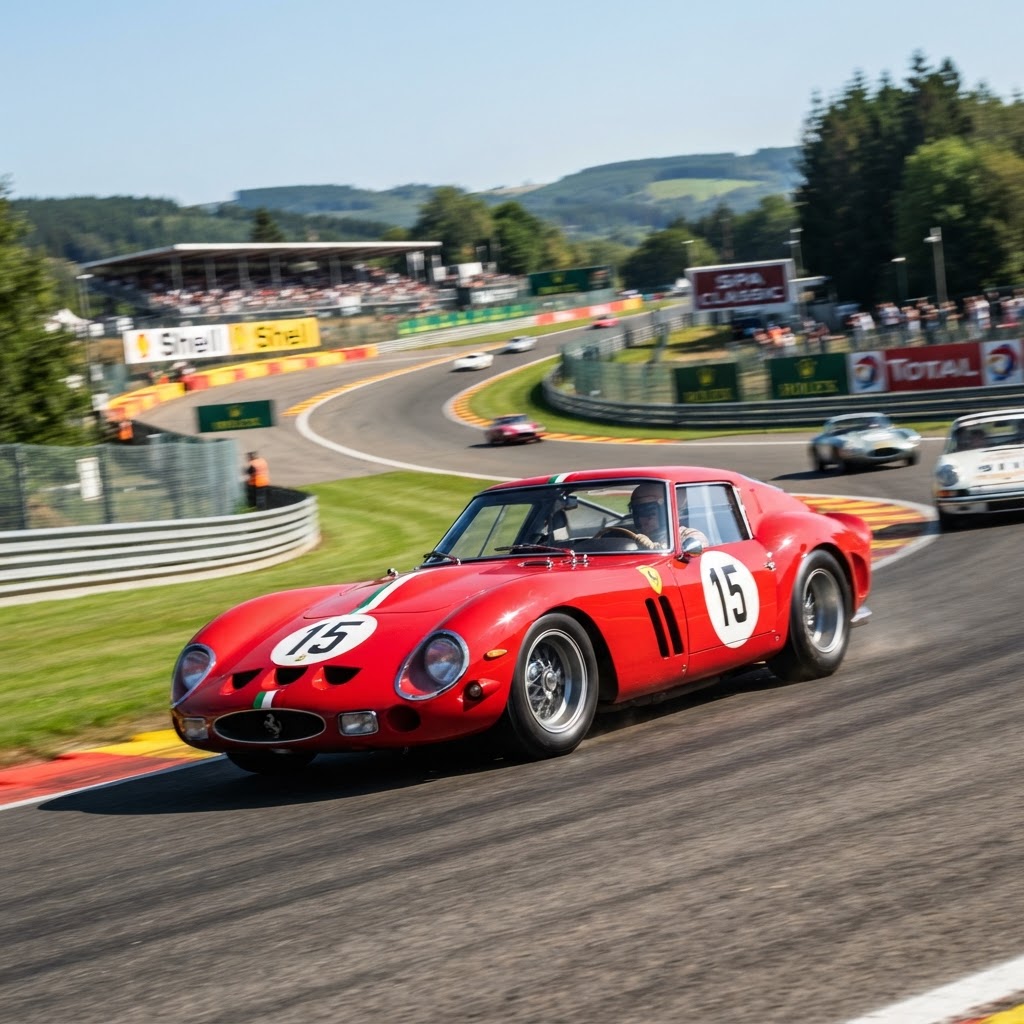
Combined value: over $263 million USD
In May 2022, a car sold for €135 million — more than the GDP of some small nations. It wasn't a modern hypercar. It was a 1955 Mercedes-Benz prototype that had sat in a museum for 67 years. Welcome to the world of ultra-rare collector cars, where rarity, racing history, and provenance converge to create the most valuable objects on four wheels.
This guide covers the 5 most expensive cars ever sold, the full story behind each one, why they command such extraordinary prices, and what they reveal about the collector car market as an alternative asset class. We'll also examine whether these machines represent genuine investment opportunities — or simply the ultimate expression of automotive passion.
Advertisement
Table of Contents
- 1. Mercedes-Benz 300 SLR Uhlenhaut Coupé — $143 Million
- 2. Ferrari 250 GTO (S/N 3413GT) — $48.4 Million
- 3. Ferrari 250 GTO (S/N 3851GT) — $38.1 Million
- 4. Aston Martin DBR1 — $22.6 Million
- 5. Bugatti Type 57 SC Atlantic — $10.7 Million
- Investment Analysis: Do These Cars Beat the Market?
- How to Enter the Collector Car Market
- Frequently Asked Questions
The 5 Most Expensive Cars Ever Sold
Sale prices in USD millions. All figures verified from auction house records and press releases.
Sources: RM Sotheby's, Bonhams, Gooding & Company auction records 2014–2022
Mercedes-Benz 300 SLR Uhlenhaut Coupé
$143 Million — Sold May 2022
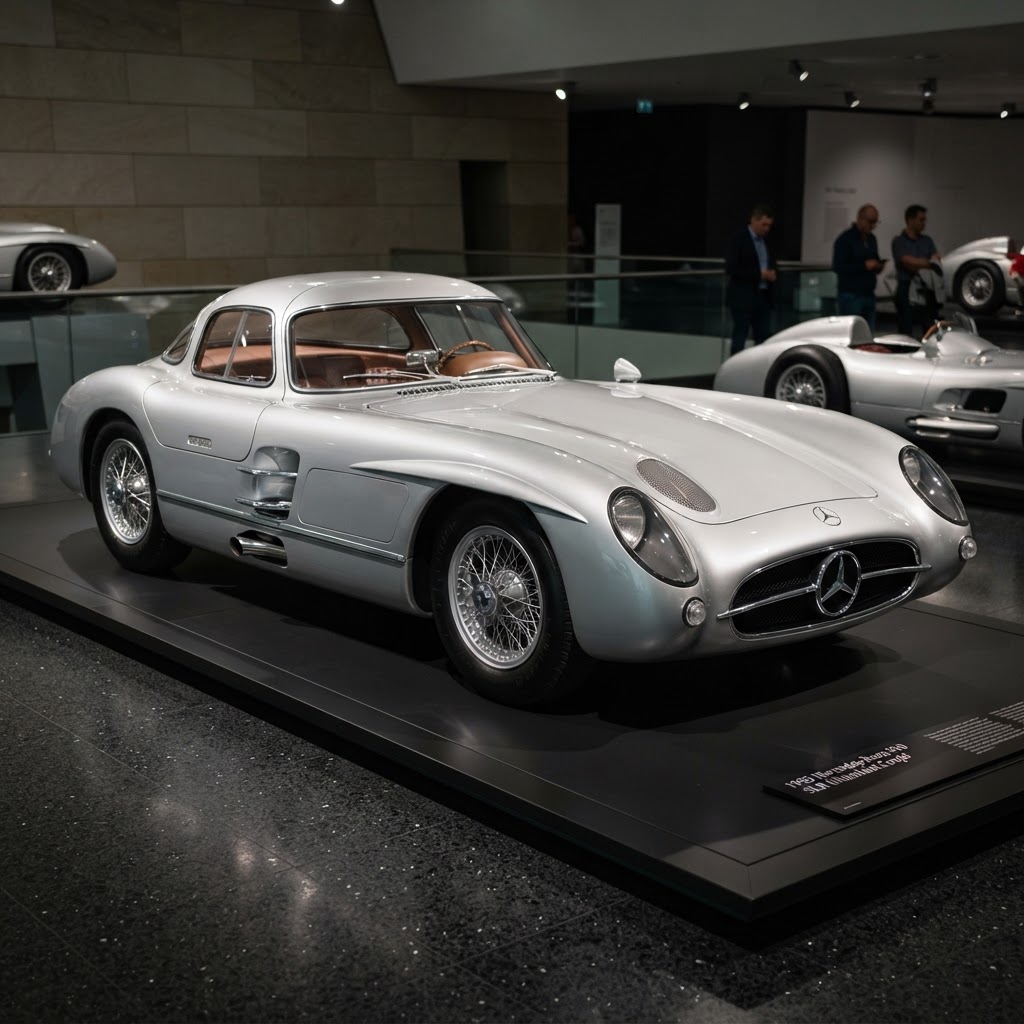
The Story: A Prototype That Changed Everything
In May 2022, RM Sotheby's conducted the most secretive and significant automotive auction in history. The venue was the Mercedes-Benz Museum in Stuttgart, Germany. The buyer was anonymous. The price was €135 million (~$143 million USD) — shattering every previous record by a factor of nearly three.
The car was the 1955 Mercedes-Benz 300 SLR Uhlenhaut Coupé, named after Rudolf Uhlenhaut, the legendary Mercedes engineer who designed it. Only two were ever built as personal transport for Uhlenhaut himself — they were never raced, never sold, and had sat in the Mercedes-Benz museum for decades.
The 300 SLR was the racing version of the W196 Formula One car that Juan Manuel Fangio drove to the 1954 and 1955 World Championships. The coupé body was designed for long-distance endurance racing, though the programme was cancelled following the catastrophic Le Mans disaster of June 1955, in which a Mercedes-Benz 300 SLR crashed into the crowd, killing 83 spectators — the deadliest accident in motorsport history. Mercedes withdrew from racing entirely and would not return to Le Mans for 44 years.
The two Uhlenhaut Coupés were the last survivors of that programme. Their 3.0-litre straight-eight engine — derived directly from the F1 car — produced 302 horsepower and could reach 180 mph (290 km/h), making it the fastest road-legal car in the world in 1955. Uhlenhaut reportedly drove one to work daily.
Why Is It Worth $143 Million?
Three factors converge to make the 300 SLR Uhlenhaut Coupé uniquely valuable:
- Absolute rarity: Only two exist. One remains in the Mercedes-Benz Museum and will never be sold. The other was the subject of this sale. There is no comparable car — ever.
- Historical significance: It represents the pinnacle of 1950s motorsport engineering, directly connected to the most dominant F1 car of its era and one of the most tragic events in racing history.
- Provenance: Designed and personally driven by Rudolf Uhlenhaut, one of the greatest automotive engineers of the 20th century. The car has a single-owner history — Mercedes-Benz — for its entire 67-year existence.
The proceeds of the sale went to the Mercedes-Benz Fund, a charitable foundation supporting STEM education. The buyer's identity remains undisclosed.
Ferrari 250 GTO (S/N 3413GT)
$48.4 Million — Sold August 2018
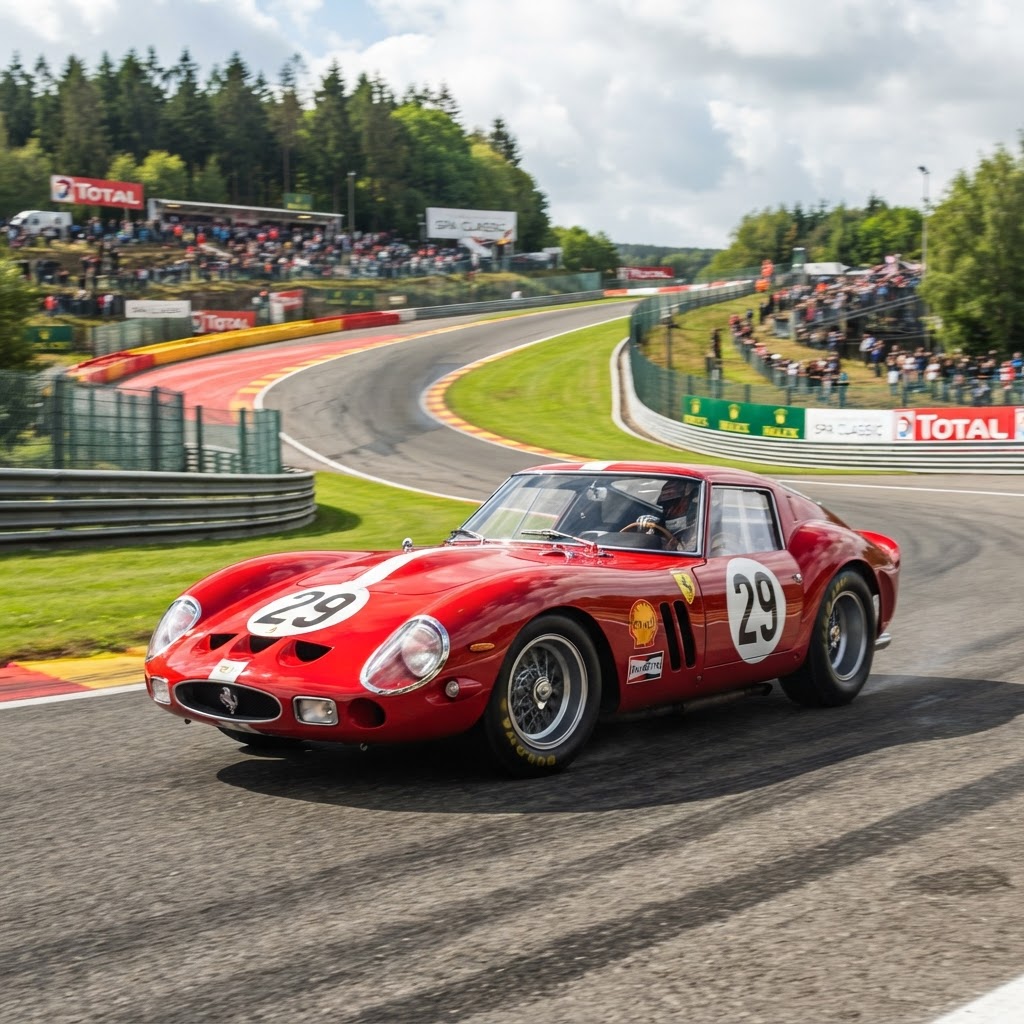
The Story: The Holy Grail of Collector Cars
If the Mercedes 300 SLR is the most expensive car ever sold, the Ferrari 250 GTO is the most coveted. In August 2018, chassis number 3413GT sold for $48.4 million in a private sale brokered by RM Sotheby's — the highest price ever achieved at public or private sale for a Ferrari, and the second-highest for any car.
The 250 GTO was built between 1962 and 1964 for the FIA GT World Championship. Ferrari produced exactly 36 examples — a number dictated by the FIA's homologation rules, which required a minimum production run of 100 cars. Ferrari submitted paperwork claiming the GTO was a development of the existing 250 GT, not a new model. The FIA accepted this, controversially, and the GTO raced — and dominated.
Chassis 3413GT was delivered new to Edoardo Lualdi-Gabardi in Italy in 1962. It raced at the Targa Florio, the Nürburgring 1000km, and the Tour de France Automobile. It was later owned by a succession of European collectors before passing to American collector David MacNeil, founder of WeatherTech, who sold it in 2018.
Why Is the 250 GTO So Expensive?
The 250 GTO's value rests on five pillars that no other car can replicate:
- Racing pedigree: The GTO won the FIA GT World Championship in 1962, 1963, and 1964. It is the only car to win three consecutive GT world titles.
- Rarity: 36 units, all of which survive. The combined estimated value of all 36 exceeds $1.5 billion.
- The 3.0-litre V12: The Colombo-designed engine is considered one of the greatest racing engines ever built, producing 300 hp from 2,953cc — extraordinary for 1962.
- Enzo Ferrari's personal involvement: Ferrari reportedly hand-selected the drivers who could purchase a GTO. Ownership was a privilege, not a transaction.
- The name: "GTO" — Gran Turismo Omologato — has become the most valuable three letters in automotive history. Ferrari has used it only twice since: the 1984 Ferrari GTO and the 2023 Ferrari GTO, both of which command massive premiums themselves.
The Appreciation Story
In 1990, a Ferrari 250 GTO could be purchased for approximately $2.1 million. By 2000, prices had risen to $6–8 million. By 2010, $18–22 million. By 2018, $48.4 million. That represents a 2,200% appreciation over 28 years, or approximately 12.8% per year — comfortably outpacing the S&P 500's 10.7% annual return over the same period.
Price Appreciation: Top Collector Cars vs Traditional Assets
Estimated values in USD millions. Ferrari 250 GTO vs Aston Martin DBR1 vs Bugatti Type 57 SC, 1990–2022.
Sources: Hagerty Price Guide, RM Sotheby's, Bonhams auction records, Classic Car Index 1990–2022
Ferrari 250 GTO (S/N 3851GT)
$38.1 Million — Sold August 2014
The Story: The Bonhams Record
Four years before the $48.4 million sale, chassis number 3851GT set what was then the world record for any car sold at auction: $38.1 million at Bonhams' Quail Lodge auction in Carmel, California, in August 2014. The buyer was American collector Greg Whitten, a former Microsoft executive.
Chassis 3851GT was built in 1963 and delivered to Maranello Concessionaires in the UK. It raced at Le Mans in 1963 and 1964, driven by Mike Salmon and Tony Maggs. It was one of the last GTOs built and featured the later-specification bodywork with a more aerodynamic nose — considered by many collectors to be the most beautiful iteration of the design.
The car passed through several notable collections, including that of Pierre Bardinon, the French leather goods magnate who assembled one of the greatest private Ferrari collections in history at his Mas du Clos estate. Bardinon's collection included multiple GTOs and is considered the gold standard of Ferrari collecting.
The GTO Market: A Study in Scarcity Economics
The fact that two Ferrari 250 GTOs occupy positions #2 and #3 on the all-time list tells you everything about the model's dominance of the collector car market. Of the 36 GTOs built, approximately 8–10 are considered "investment grade" — meaning they have unbroken racing history, original bodywork, and documented provenance. These cars trade privately for $35–55 million.
The remaining 26 GTOs, while still extraordinarily valuable at $15–30 million each, have either been rebodied, had engine changes, or lack complete documentation. In the GTO world, provenance is everything — a single missing logbook entry can reduce a car's value by millions.
💡 The GTO Homologation Controversy
Ferrari's claim that the GTO was a development of the existing 250 GT was widely disputed. The GTO shared almost nothing with the road car — it had a new chassis, new bodywork, and a heavily modified engine. The FIA's acceptance of Ferrari's homologation papers remains one of the most controversial decisions in motorsport history. Some historians argue the GTO should never have been allowed to race — which makes its three consecutive championships even more remarkable.
Production Numbers: How Rare Are These Cars?
Total units produced. Lower production = higher rarity premium. The Mercedes 300 SLR (2 units) is in a category of its own.
Sources: Ferrari, Mercedes-Benz, Aston Martin, Bugatti factory records and marque historians
Aston Martin DBR1
$22.6 Million — Sold August 2017
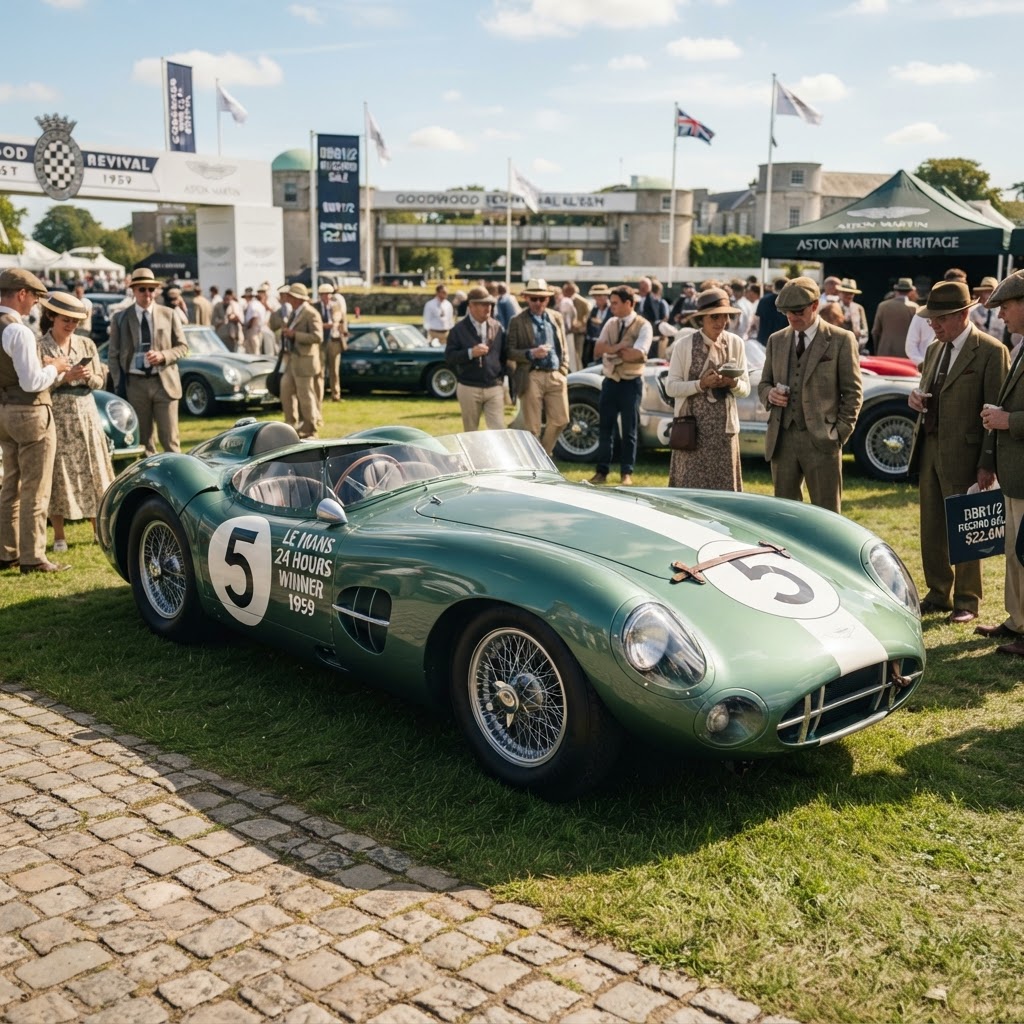
The Story: Britain's Greatest Racing Car
In August 2017, RM Sotheby's sold the Aston Martin DBR1/1 — the first of five DBR1s ever built — for $22.6 million at Monterey Car Week, setting a new record for any British car sold at auction. The buyer was an anonymous European collector.
The DBR1 is the most important British racing car ever built. Between 1958 and 1959, it won the World Sportscar Championship and the 24 Hours of Le Mans — the only time a British manufacturer has won both in the same year. The Le Mans victory, driven by Roy Salvadori and Carroll Shelby (yes, that Carroll Shelby), came after Ferrari's dominant 250 TR had retired with mechanical failures.
DBR1/1 was the development car — the first chassis built, used for testing and development before the racing programme began. It was driven by Stirling Moss, Roy Salvadori, and Tony Brooks in period, and competed at Le Mans, the Nürburgring, and Goodwood. Its racing history reads like a who's who of 1950s motorsport.
Only five DBR1s were built, and all five survive. DBR1/1 is considered the most historically significant because of its development role and the calibre of drivers who raced it. The car was acquired by Aston Martin's then-owner David Brown (the "DB" in every Aston Martin from the DB2 onwards) after its racing career and remained in private hands until 2017.
Why Is the DBR1 So Valuable?
The DBR1's value is built on three foundations: absolute rarity (5 units), outright racing success (Le Mans and World Championship winner), and British national identity. For British collectors, the DBR1 occupies the same emotional space as the Ferrari 250 GTO does for Italian collectors — it is the definitive expression of a nation's automotive and motorsport heritage.
The car also benefits from the "Stirling Moss effect." Moss, widely considered the greatest driver never to win the Formula One World Championship, drove DBR1/1 in period. Any car with a documented Moss connection commands a significant premium — his 1961 Lotus 18 sold for $4.7 million in 2016, and his 1955 Mercedes-Benz 300 SLR (the open racing version, not the coupé) sold for $29.6 million in 2022.
Advertisement
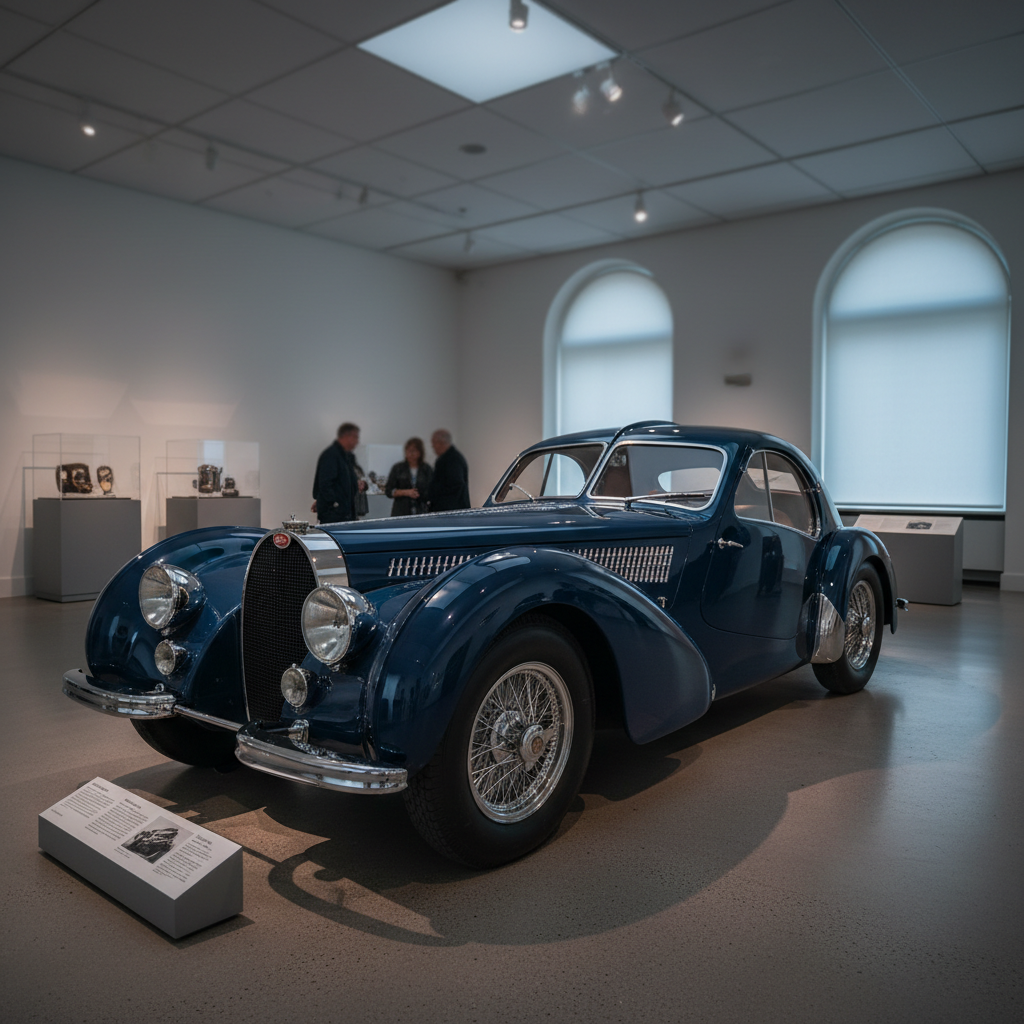
The Story: The Most Beautiful Car Ever Built
The Bugatti Type 57 SC Atlantic is not merely a car — it is a work of art on wheels. Built between 1936 and 1938, only four were ever produced. One was destroyed during World War II. The remaining three are among the most valuable objects in existence.
The Atlantic was designed by Jean Bugatti, Ettore's son, who was killed in a road accident in 1939 at the age of 30. The car's most distinctive feature is the riveted dorsal fin running the length of the body — a design element that arose from the material used in construction. Jean Bugatti used electron (a magnesium alloy) for the body, which could not be welded, so the panels were riveted together. The result is one of the most recognisable silhouettes in automotive history.
The supercharged 3.3-litre straight-eight engine produced approximately 210 horsepower — extraordinary for a road car in 1936 — and Bugatti claimed a top speed of 200 km/h (124 mph), though some sources suggest the car could exceed this. The "SC" designation stands for "Surbaissé Compresseur" — lowered supercharged.
Of the three surviving Atlantics: one is owned by the Mullin Automotive Museum in Oxnard, California (the "Rothschild Atlantic," formerly owned by the Rothschild banking family); one is in the Schlumpf Collection at the Cité de l'Automobile in Mulhouse, France; and one — the "Pope Atlantic," formerly owned by Ralph Lauren — sold privately in 2022 for an estimated $10.7 million, though the exact figure was never officially confirmed.
Why Is the Type 57 SC Atlantic So Rare?
The Atlantic's rarity is a product of its era. In the 1930s, coachbuilt automobiles were bespoke objects — each one different, each one made to order. Bugatti built the Atlantic as a statement of engineering and artistic ambition, not as a commercial product. The four examples were delivered to specific clients: the Rothschild family, the Schlumpf brothers, Ralph Lauren, and one that was lost to history (and the war).
The car that was destroyed in WWII — chassis 57453 — was reportedly hidden in a wall at the Bugatti factory in Molsheim, Alsace, to prevent it from being seized by German forces. It was never recovered. Its loss makes the surviving three even more precious.
🎨 The "Lost" Atlantic
Chassis 57453 — the "missing" Atlantic — has been the subject of intense speculation for decades. In 2009, a researcher claimed to have found evidence that the car survived the war and was converted into a truck. The story was never verified. If the fourth Atlantic were ever discovered intact, it would almost certainly become the most valuable car in history, potentially exceeding even the Mercedes 300 SLR's $143 million record.
Investment Analysis: Do These Cars Beat the Market?
Annual returns 1990–2022. Classic car index vs traditional asset classes. Past performance does not guarantee future results.
Sources: Hagerty Classic Car Index, S&P 500 historical data, World Gold Council, Knight Frank Wealth Report 2023, Mei Moses Art Index
The data is striking: the Ferrari 250 GTO has delivered approximately 18.2% annual returns since 1990, compared to 10.7% for the S&P 500. The broader Classic Car Index (top 50 collector cars) has returned 12.1% annually — still outperforming gold (5.8%), prime London property (7.4%), and art (8.9%).
However, these headline figures require important caveats:
Accounting for these costs, the net annual return on a top-tier collector car is closer to 14–16% for the very best examples — still superior to most asset classes, but requiring significant capital, expertise, and patience. The minimum viable investment in this tier is approximately $5 million, and the market is illiquid: selling a $40 million car can take 12–24 months.
How to Enter the Collector Car Market
Key Principles for Collector Car Investment
- Buy the best example you can afford. In collector cars, condition and provenance are everything. A perfect example of a lesser model will always outperform a poor example of a better model. The top 10% of any model's production accounts for 40–50% of the total value of all examples.
- Racing history commands a premium. A car with documented race history — especially at Le Mans, the Mille Miglia, or the Targa Florio — is worth 30–100% more than an identical car without it. Original race cars are worth multiples of road cars from the same model line.
- Matching numbers matter. "Matching numbers" means the engine, gearbox, and body all carry the original factory-stamped serial numbers. A numbers-matching Ferrari 250 GTO is worth $40–50 million. A non-matching example might be worth $15–20 million.
- Understand the auction ecosystem. The major houses — RM Sotheby's, Bonhams, Gooding & Company, and Mecum — charge buyer's premiums of 10–15% on top of the hammer price. Seller's commissions add another 5–10%. Total transaction costs of 20–25% mean you need significant appreciation just to break even.
- Consider fractional ownership. Platforms like Rally Rd., Motorcar Portfolio, and Curated offer fractional shares in collector cars from $50–$5,000, allowing exposure to the asset class without the capital requirements or operational complexity of outright ownership.
Related Guides on CarCostBreakdown
Sources & Citations
[1] RM Sotheby's. "Mercedes-Benz 300 SLR Uhlenhaut Coupé — Private Sale Result." May 2022. rmsothebys.com
[2] RM Sotheby's. "Ferrari 250 GTO, S/N 3413GT — Monterey 2018." August 2018. rmsothebys.com
[3] Bonhams. "Ferrari 250 GTO, S/N 3851GT — Quail Lodge 2014." August 2014. bonhams.com
[4] RM Sotheby's. "Aston Martin DBR1/1 — Monterey 2017." August 2017. rmsothebys.com
[5] Hagerty. "Classic Car Price Guide — Ferrari 250 GTO Historical Values." 2023. hagerty.com
[6] Knight Frank. "The Wealth Report 2023: Luxury Investment Index." 2023. knightfrank.com
[7] Mei Moses. "All Art Annual Returns Index 1990–2022." 2023. meimoses.com
[8] Classic Car Index. "Top 50 Collector Cars Annual Return Data 1990–2022." 2023.
[9] Gooding & Company. "Bugatti Type 57 SC Atlantic — Pebble Beach 2022." August 2022. goodingco.com
[10] Ferrari. "Ferrari 250 GTO Production Records." Ferrari Historical Archive, Maranello.
[11] Aston Martin Heritage Trust. "DBR1 Racing History and Production Records." astonmartinheritage.com
[12] Bugatti. "Type 57 SC Atlantic — Official History." bugatti.com
Frequently Asked Questions
Advertisement
The Bottom Line
The five most expensive cars ever sold share a common thread: they are not merely vehicles, but physical embodiments of history. The Mercedes 300 SLR represents the pinnacle of 1950s engineering and the tragedy of Le Mans. The Ferrari 250 GTO is the definitive expression of Enzo Ferrari's genius. The Aston Martin DBR1 is Britain's greatest motorsport achievement. The Bugatti Type 57 SC Atlantic is the most beautiful object ever built on four wheels.
As investments, the top tier of collector cars has outperformed virtually every traditional asset class over 30 years. But they are not liquid, not simple, and not accessible to most investors. For those with the capital and the passion, they represent the ultimate convergence of art, history, and financial return. For the rest of us, they are a window into what human beings are capable of when engineering, artistry, and ambition align.
Advertisement